
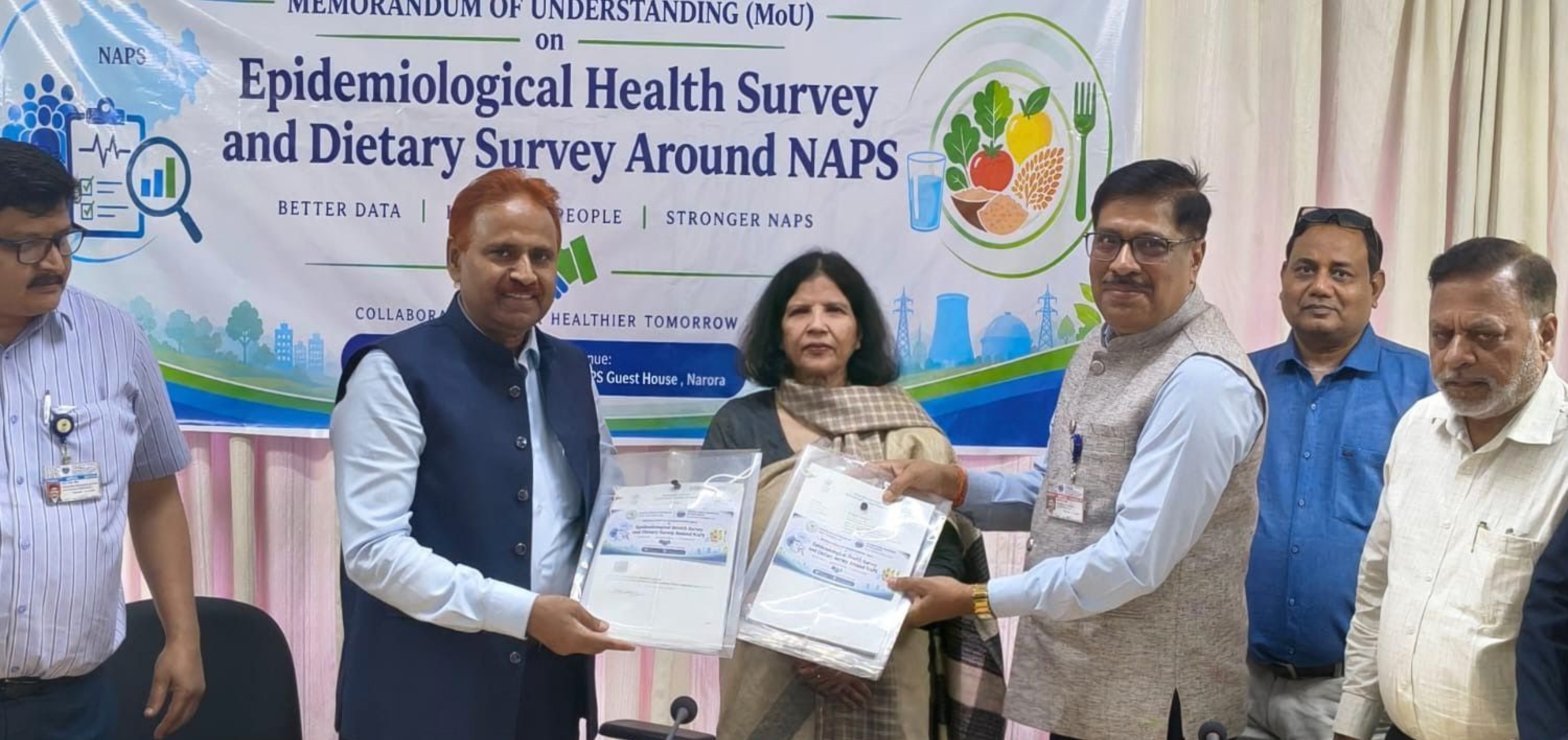
A team from JN Medical College will soon be visiting thousands of households around the Narora Atomic Power Station. AMU and the Nuclear Power Corporation of India Limited (NPCIL) have signed an MoU under which the Department of Community Medicine will run two large surveys, one on the health of people living near the plant and one on what they eat and drink.
Who signed, and who will run it
Vice-Chancellor Prof. Naima Khatoon and Registrar Prof. Aasim Zafar were at the signing along with Shri Amar Nath Thakur, Station Director of the Narora Atomic Power Station (NAPS), and other NAPS officials. The project sits with JNMC’s Community Medicine department.
- Principal Investigator: Prof. M. Athar Ansari
- Co-Principal Investigator: Dr. Ali Jafar Abedi
- Duration: 16 months, with a separate technical report for each survey
Prof. Ansari has run similar community-based projects before, and Dr Abedi told the gathering that experience from those earlier studies would help keep this one on track.
 Also readAMU Seerat Week Ends at Strachey Hall: 528 Students Competed, Around 80 Win Prizes
The health survey: 43,983 people in 10 km
The epidemiological survey covers the population within 10 kilometres of the station, an area with an estimated 2.20 lakh people. The team plans to reach 8,796 households and 43,983 individuals.
- Demographic and socioeconomic details
- Lifestyle factors and medical history
- Reproductive health and selected clinical parameters
- Screening for oral cavity cancer and breast cancer among eligible people
The dietary survey: three seasons, 30 km
The second survey goes wider, to a 30-kilometre radius with roughly 1.99 lakh people. Field teams will record household food and drinking water consumption in three rounds, in summer, monsoon and winter, so the numbers reflect how diets shift through the year.
The output will be site-specific estimates of dietary intake broken down by area, age and sex. This is where the nuclear side comes in: the data feeds into radiological impact assessment, in particular the calculation of ingestion dose, which is how much radiation exposure could reach people through food and water.
Both studies will start only after ethical clearance and will follow set procedures for informed consent and quality checks.
What was said at the signing
Prof. Naima Khatoon said projects like this let the university put its scientific expertise to work on real community health problems, and credited the Community Medicine team for taking it on. Prof. Zafar spoke about AMU working with national organisations, while Shri Thakur said the station wanted systematic studies that give reliable health and diet information about people living around it.
JNMC departments have been busy this season; read our report on AligEYeCon 2026, the UP ophthalmology conference hosted by AMU.
Frequently asked questions
What is the AMU and NPCIL MoU about?
It covers an epidemiological health survey and a dietary survey in the areas around the Narora Atomic Power Station, to be carried out by the Department of Community Medicine, JN Medical College, AMU.
How many people will the health survey cover?
It plans to cover 43,983 individuals from 8,796 households within 10 km of the station, out of an estimated population of about 2.20 lakh.
Why is a dietary survey needed near a nuclear plant?
The diet and drinking water data will be used for radiological impact assessment, especially for calculating ingestion dose.
How long will the project take?
16 months, with separate technical reports for the two surveys.
Source: AMU Public Relations Office, 2 November 2026.