
The AMU minority status case asks one question: was Aligarh Muslim University established by the Muslim community, and can it therefore claim minority rights under Article 30(1) of the Constitution? On 8 November 2024, a seven-judge bench of the Supreme Court overruled its own 1967 judgment that had said no, and sent the final decision on AMU to a regular bench. This explainer sets out how the dispute began, what the 2024 verdict said, and where things stand.
Why the question matters
Article 30(1) gives religious and linguistic minorities the right to establish and administer educational institutions of their choice. A minority institution has more freedom over its admissions and administration than other institutions. For AMU, the issue has been tied to reservation in admissions, including a 2005 policy that reserved seats for Muslim candidates.
Timeline of the AMU minority status case
| Year | What happened |
|---|---|
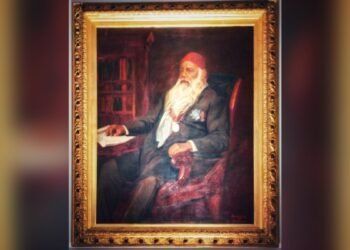
| 1875-1877 | Sir Syed Ahmad Khan opens a school at Aligarh on 24 May 1875; it becomes the Muhammadan Anglo-Oriental (MAO) College in 1877. |
| 1920 | The Aligarh Muslim University Act turns MAO College into AMU. Its Court, the supreme body, could have only Muslim members. |
| 1951 and 1965 | Amendments open the Court to non-Muslims, end compulsory religious instruction for Muslim students and shift powers away from the Court. |
| 1967 | In S. Azeez Basha v Union of India, a five-judge bench holds that AMU was established by the central legislature, not by the Muslim minority. |
| 1981 | A two-judge bench in the Anjuman-e-Rahmaniya case doubts Azeez Basha and refers it to a larger bench. The same year Parliament amends the AMU Act to describe AMU as an institution established by the Muslims of India. |
| 2005-2006 | AMU reserves 50% of postgraduate medical seats for Muslim candidates. The Allahabad High Court strikes down the reservation and the 1981 provision, relying on Azeez Basha. |
| 2006 | The Union government and AMU appeal to the Supreme Court, which stays the reservation. |
| 2016 | The Union government withdraws its appeal and tells the court it does not accept AMU’s minority status. AMU continues the case. |
| 12 February 2019 | A three-judge bench led by CJI Ranjan Gogoi refers the question to a seven-judge bench. |
| 9 January to 1 February 2024 | A seven-judge bench led by CJI D.Y. Chandrachud hears arguments over eight days and reserves judgment. |
| 8 November 2024 | By a 4:3 majority, the court overrules Azeez Basha and sends AMU’s status to a regular bench. |
What the 1967 Azeez Basha judgment said
The 1967 bench, led by Chief Justice K.N. Wanchoo, looked at how AMU came into being as a university. It held that the university was created by the 1920 Act passed by the central legislature. In its view, the Muslim community had not established AMU, so the university could not claim the right to administer it under Article 30. The bench also upheld the 1951 and 1965 amendments.
 Also readAMU Schools: STS Investiture 2026-27, Unity Day and Sports Meet
For more than five decades, this judgment shaped every argument about AMU. The Allahabad High Court relied on it when it struck down the 2005 reservation.
What the Supreme Court decided in November 2024
The majority opinion was written by Chief Justice D.Y. Chandrachud and joined by Justices Sanjiv Khanna, J.B. Pardiwala and Manoj Misra. Justices Surya Kant, Dipankar Datta and Satish Chandra Sharma wrote separate dissents.
The majority’s main holdings were:
- Incorporation is not establishment. A statute giving a university its legal form does not mean Parliament founded it. Azeez Basha was wrong to treat the two as the same.
- Article 30 covers older institutions. It applies to institutions set up before the Constitution came into force, not only after.
- The reference was valid. The 1981 bench had doubted, not openly contradicted, Azeez Basha, so a larger bench could take it up.
The court also laid down how to decide whether a minority established an institution:
- Genesis: Who had the idea, and whether members of the minority community conceived it.
- Purpose: The institution need not serve only the minority, and teaching need not be in its language or religion.
- Implementation: Who took the practical steps, such as raising funds and securing land.
- Administration: It need not be run by the minority. The question is whether the way it is run affirms its minority character.
In dissent, Justice Datta said the new tests should apply only going forward and stated that AMU is not a minority institution. Justice Surya Kant held that the reference to the seven-judge bench was not legal, though he agreed that a university’s minority character should not be denied only because it was created through a statute.
Is AMU a minority institution today?
The 2024 verdict did not declare AMU a minority institution. It removed the 1967 precedent and asked a regular bench to apply the new tests to AMU’s history. Until that bench rules, the final answer is pending. We could not find any report of a final ruling by the regular bench as of early November 2026.
The regular bench will look closely at the founding years: Sir Syed’s campaign, the money raised from the community and the land acquired for MAO College. Our timeline from MAO College to AMU, 1875 to 1920 covers that period in detail, and the Aligarh Movement explainer describes the people who built it.
What it means for students
For now, admissions follow AMU’s current rules. Any change in reservation policy would depend on the regular bench’s final decision and on later rules. Applicants should rely on the official Guide to Admissions for each session. Our AMU Admission 2027 guide tracks the dates and entrance tests.
Sources: Supreme Court Observer, All India Radio News.
Frequently asked questions
Is AMU a minority institution?
The question is still open. The Supreme Court overruled the 1967 Azeez Basha judgment on 8 November 2024 but left the final decision on AMU to a regular bench.
What was the Azeez Basha case?
S. Azeez Basha v Union of India (1967) was a five-judge Supreme Court ruling that AMU was established by the central legislature through the 1920 Act, not by the Muslim community.
Which judges were in the majority in the 2024 AMU verdict?
CJI D.Y. Chandrachud and Justices Sanjiv Khanna, J.B. Pardiwala and Manoj Misra. Justices Surya Kant, Dipankar Datta and S.C. Sharma dissented.
What tests did the Supreme Court set for minority institutions?
Courts must look at the genesis of the idea, the purpose, who implemented it through funds and land, and whether the administration affirms its minority character.