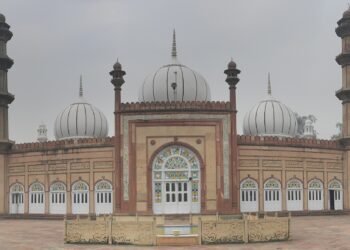

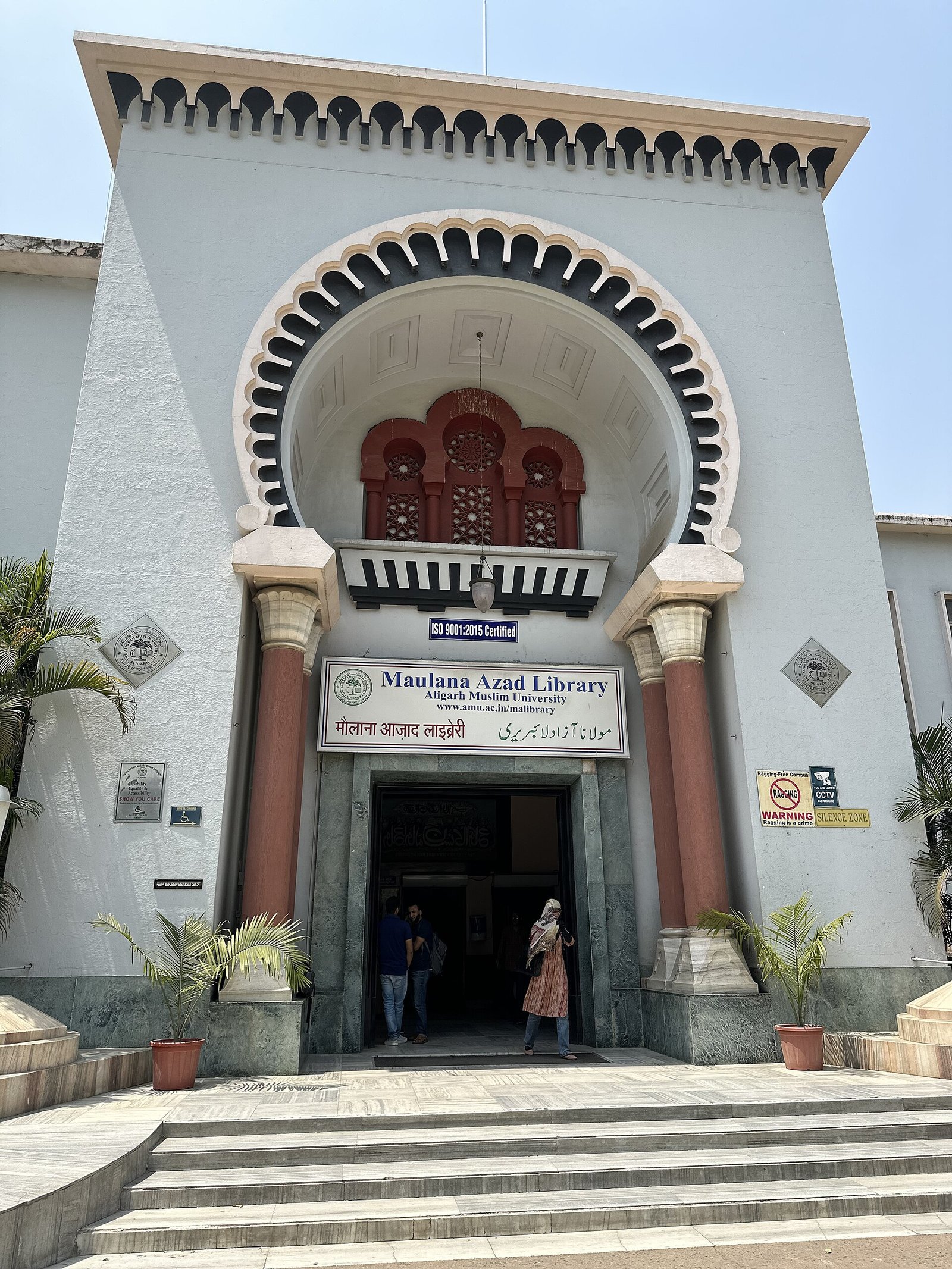
The Maulana Azad Library is the central library of Aligarh Muslim University. It began in 1877 as the Lytton Library of the MAO College, and its present seven-storey building was inaugurated by Jawaharlal Nehru in 1960. According to AMU, it holds about 14 lakh documents, including 16,117 manuscripts, and its reading halls stay open 18 hours a day.
History of Maulana Azad Library, AMU
The library is as old as the college that grew into AMU. When the Muhammadan Anglo-Oriental College was set up at Aligarh in 1877, a library was founded with it and named the Lytton Library, after Lord Lytton, who was then the Viceroy of India.
As the college became a university in 1920 and student numbers grew, the collection needed more space. The present building was inaugurated in 1960 by Jawaharlal Nehru, India’s first Prime Minister. The library was named after Maulana Abul Kalam Azad, the scholar and freedom fighter who served as independent India’s first Education Minister.
 Also readSir Syed Ahmad Khan: Life, Ideas and the Founding of AMU
Today the AMU website describes it as one of the largest university libraries in the world. Students and alumni usually just call it the “MA Library”.
Maulana Azad Library: quick facts
| Item | Details (as per AMU) |
|---|---|
| Founded | 1877, as the Lytton Library of MAO College |
| Present building | Inaugurated in 1960 by Jawaharlal Nehru |
| Named after | Maulana Abul Kalam Azad, first Education Minister of India |
| Building | Seven storeys, about 10,000 sq m carpet area |
| Premises | About 4.5 acres |
| Total documents | About 14 lakh |
| Manuscripts | 16,117 |
| Reading halls | 6 large halls and 8 small reading rooms |
| Reading hours | 18 hours a day, longer during examinations |
How big is the collection?
The library’s collection page on the AMU website gives the following figures. The book count is as on 31 March 2021 and includes the departmental libraries.
- Books (text, reference and gifted): 13,81,782
- Oriental collection (Hindi, Sanskrit, Persian, Urdu and Arabic): 3,27,043
- Theses and dissertations: 15,659
- Rare books: 20,000
- Manuscripts: 16,117
- Books in Braille: 3,200
- Subscribed print journals: 310
The digital side has also grown. AMU lists 14,360 digitised manuscripts, 13,500 digitised rare books, 10,424 digitised books in Oriental languages and 12,325 e-theses and dissertations. Users also get access to subscribed and consortia e-journals and online databases.
Notable manuscripts and rare holdings
The Manuscript Division is the part of the library most visitors ask about. The AMU website lists several items that it describes as rare or unique:
- A Quran fragment in Kufic script on parchment, over 1,400 years old, which the library states was transcribed by Hazrat Ali.
- Mughal farmans (royal orders) issued by rulers including Babur, Akbar, Shah Jahan and Aurangzeb.
- “Red Tulip”, a painting by Mansoor Naqqash, a court artist of Emperor Jahangir.
- A Persian translation of the Bhagavad Gita by Faizi, the Mughal-era poet and scholar.
- The Halnama of Bayazid Ansari and a copy of Nahjul Balagha.
- Palm-leaf manuscripts in Telugu and Malayalam.
- Early printed science books, including a 1572 Latin edition of Ibn al-Haytham’s work on optics and a 1593 edition of Avicenna’s Al-Qanun.
Access to manuscripts and rare books is controlled, as these items need careful handling. Researchers should approach the Manuscript Division for the rules on consultation and copies.
What are the main sections of the library?
The library is organised into divisions and sections, each with its own job. The main ones listed by AMU are:
- Circulation Division: issue and return of books for members.
- Research Division: reference collection and research support.
- Oriental Division: books in Persian, Urdu, Arabic, Hindi and Sanskrit.
- Manuscript Division: manuscripts, farmans and other rare material.
- Periodicals Division and the Newspapers Reading Area.
- Digital Resources Centre and the Computer Applications Division for e-resources.
- Sir Syed Section: material by and on Sir Syed Ahmad Khan.
- Braille Section: books and support for visually impaired readers.
- Conservation and Binding Section and the Collection Development Division, which work behind the scenes.
Reading halls and timings
The library has six large reading halls and eight small reading rooms. AMU’s figures put seating at close to 2,000 readers at a time, which is why the halls stay busy during examination season.
The reading halls are open 18 hours a day, except on a few national and religious holidays, and the hours are extended during examinations. The library offices work from 9 am to 5 pm on working days, and from 8 am to 12.30 pm on Fridays. Timings can change, so check the notice board or the library page before planning a visit.
Who can use Maulana Azad Library and how to become a member?
According to the library’s rules on the AMU website, membership is open to:
- Students of the university.
- Teachers and other university employees.
- Members of the AMU Court, Executive Council and Finance Committee.
- Other persons, at the discretion of the University Librarian.
New students are usually enrolled as members through their faculty or department after admission. Outside researchers, including alumni who are no longer enrolled, need permission from the University Librarian. It is best to carry a valid identity document and a letter from your institution when applying.
For more on campus life and resources, see our Students section, and read about the university’s past in our History articles.
Where is Maulana Azad Library on the AMU campus?
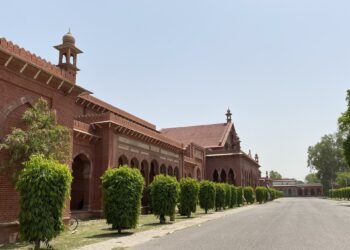
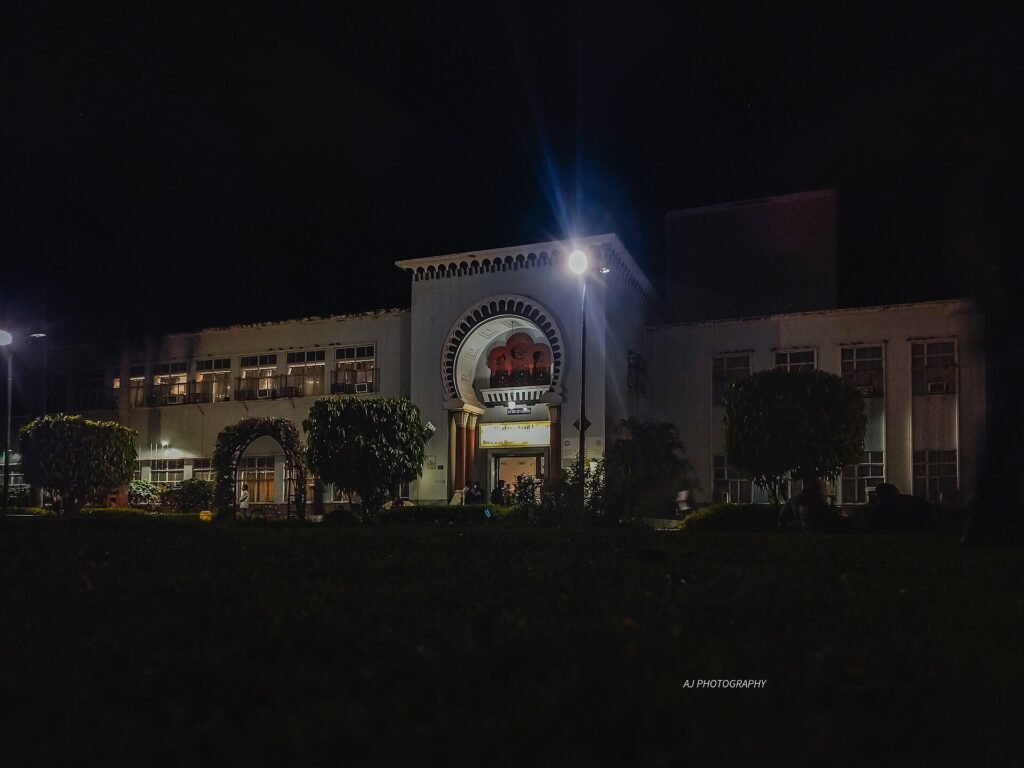
The library stands inside the main AMU campus in Aligarh, in its own grounds of about 4.5 acres with lawns around the building. Its seven-storey block is one of the tallest buildings on campus, so it is easy to spot. On campus, ask for the MA Library.
Visitors who are not members should report to the reception or library office first, as entry to reading halls and special collections is regulated.
Frequently asked questions
When was Maulana Azad Library AMU established?
It began in 1877 as the Lytton Library of the MAO College. The present building was inaugurated by Jawaharlal Nehru in 1960 and named after Maulana Abul Kalam Azad.
How many manuscripts are there in Maulana Azad Library?
The AMU website lists 16,117 manuscripts, of which 14,360 have been digitised.
How many books are in Maulana Azad Library AMU?
AMU lists 13,81,782 books as on 31 March 2021, including departmental libraries. The library puts its total holdings at about 14 lakh documents.
Can outsiders use Maulana Azad Library?
Membership is mainly for AMU students, teachers and staff. Other persons can be granted membership at the discretion of the University Librarian.
What are the timings of Maulana Azad Library?
The reading halls are open 18 hours a day except on a few holidays, with longer hours during examinations. Library offices work 9 am to 5 pm, and 8 am to 12.30 pm on Fridays.
Sources: AMU, About the Maulana Azad Library, AMU, Library collection, AMU, Maulana Azad Library.