
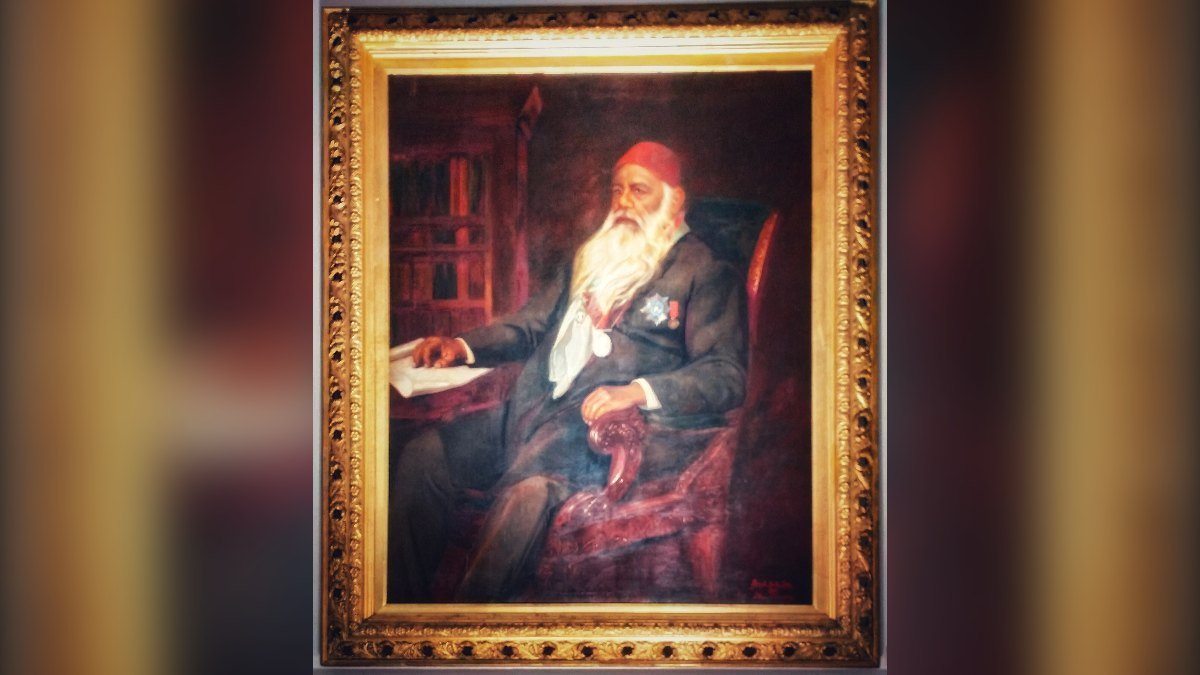
If you want to read about Sir Syed Ahmad Khan beyond the speeches heard every 17 October, six books cover his life, his writing and the college he built at Aligarh. This November 2026 list of the best books on Sir Syed brings together a new Oxford biography, an Aligarh scholar’s study, English translations of his own work and the standard history of the MAO College’s early students. Each one also works as a gift for an Alig in the family this season.
Best books on Sir Syed at a glance
| Book | Author or translator | Type | Best for |
|---|---|---|---|
| Sir Syed Ahmad Khan: A Private Life | Iftikhar Alam Khan, tr. Ather Farouqui | Biography (OUP, 2025) | His family and personal life |
| Sir Syed Ahmad Khan: Reason, Religion and Nation | Shafey Kidwai | Critical study (Routledge) | A balanced, evidence-led reading |
| Asar-us-Sanadid | Sir Syed, tr. Rana Safvi | His Delhi monuments survey | History and heritage lovers |
| A Voyage to Modernism | Mushirul Hasan and Nishat Zaidi | His England travelogue | Readers curious about the MAO College idea |
| The Causes of the Indian Revolt | Sir Syed | Short essay on 1857 | A quick first read |
| Aligarh’s First Generation | David Lelyveld | History of the MAO College | Students and researchers |
For a short account of his life and works before you start, read our profile of Sir Syed Ahmad Khan: biography, books and legacy.
1. Sir Syed Ahmad Khan: A Private Life by Iftikhar Alam Khan
This is the newest book on the list. Oxford University Press India published the English edition in September 2025, translated and edited by Ather Farouqui, in a 352-page hardback launched at Rs 1,195. The book grew out of Iftikhar Alam Khan’s Urdu work Sir Syed: Daroon-e-Khana.
 Also readSir Syed’s Private Life, Now in English: What Rahat Abrar Says About Iftikhar Alam Khan’s Book
It looks at his childhood, family history and relationships, and at how the family moved from loyalty to the Mughals to service under the British. The preface openly says that most writing on Sir Syed still echoes Hali’s Hayat-i-Javed, and this book tries to step outside that.
- Suits: readers who know the public story and want the man behind it
- Format: hardback, 352 pages
- Drawback: it is a personal life, so it spends less time on his religious and political writing
2. Sir Syed Ahmad Khan: Reason, Religion and Nation by Shafey Kidwai
Shafey Kidwai taught communication studies at AMU for more than 35 years and won the Sahitya Akademi Award for Urdu in 2019. His Routledge India study runs to 258 pages and draws on archival records, speeches and Sir Syed’s own writing.
The book covers his service on colonial councils and official bodies and his views on press freedom, female education and Hindu-Muslim unity. A review in Outlook noted that Kidwai checks disputed claims against documents, including some made in earlier biographies, and neither idolises nor condemns his subject.
- Suits: students of history, political science and mass communication
- Format: 258 pages, first edition
- Drawback: academic in tone, so it reads slower than a popular biography
3. Asar-us-Sanadid, translated by Rana Safvi
Sir Syed first published Asar-us-Sanadid in 1847 as a record of Delhi’s buildings and monuments, then revised it in 1854. Rana Safvi’s translation, published by Tulika Books in 2018, is the first English version of both editions, with notes, appendices and sketches based on the lithographs of the first Urdu edition.
It shows a side of Sir Syed many Aligs never meet: the young scholar walking through Delhi and writing down inscriptions before 1857 changed the city.
- Suits: heritage walkers, Delhi history readers, gift buyers who want a handsome book
- Format: hardback, about 400 pages, black-and-white sketches
- Drawback: heavy and detailed, better for slow reading than a single sitting
4. A Voyage to Modernism, edited by Mushirul Hasan and Nishat Zaidi
Sir Syed reached Britain on 4 May 1869 with his sons Syed Mahmood and Syed Hamid and stayed until September 1870. He studied Cambridge and other institutions closely, and the visit shaped his plan for the Muhammadan Anglo-Oriental College. Musafiran-e-London is his Urdu account of that journey.
Primus Books published this complete English translation in 2011, with editorial notes and archival photographs. The hardback was launched at Rs 950.
- Suits: readers who want to see where the idea of the MAO College came from
- Format: hardback with illustrations
- Drawback: the editors themselves note his picture of England is sometimes simplistic
5. The Causes of the Indian Revolt by Sir Syed Ahmad Khan
Sir Syed wrote Asbab-e-Baghawat-e-Hind after the revolt of 1857. It argued that the absence of Indians in the legislative council and British ignorance of Indian opinion lay behind the uprising. The English translation first appeared in 1873, and Oxford University Press reissued it in 2001 in its Oxford in Asia Historical Reprints series.
- Suits: anyone who wants to read Sir Syed in his own words first
- Format: hardback, 65 pages
- Drawback: a reprint without much modern commentary, so some context helps
6. Aligarh’s First Generation by David Lelyveld
First published by Princeton University Press in 1978 and later issued in India by Oxford University Press, this is still the standard history of the MAO College’s founders and students in its first 25 years. Lelyveld looks at how a generation of young Muslims adjusted to colonial rule and the rise of nationalism through life at Aligarh.
- Suits: history and sociology students, AMU researchers, old boys and girls of the university
- Format: Indian edition from Oxford University Press
- Drawback: covers only the college years up to about 1900, not the university after 1920
How to choose a book on Sir Syed
- Short on time: start with The Causes of the Indian Revolt. It is 65 pages.
- Want his life story: pick A Private Life for the family side or Kidwai’s study for the public and political side.
- Interested in Aligarh itself: Lelyveld’s history and the England travelogue explain how the college took shape.
- Buying a gift: the Rana Safvi translation and the OUP biography are hardbacks that look good on a shelf.
- Check the edition: older titles have several printings. Match the author or translator name before you order.
The campus he built is part of the story too. Our guide to Strachey Hall, the campus’s oldest building, and the list of Urdu poets and writers who studied at AMU make good companions to any of these books.
The AMU Sir Syed Academy keeps a longer list of more than a hundred English works on him, which is useful once you have read one or two of the books above. See the Sir Syed Academy list.
Frequently asked questions
Which is the best biography of Sir Syed Ahmad Khan?
Hali’s Hayat-i-Javed is the classic account. For newer English reading, Sir Syed Ahmad Khan: A Private Life (OUP, 2025) covers his personal life and Shafey Kidwai’s Reason, Religion and Nation covers his public and political work.
What books did Sir Syed Ahmad Khan write?
His major works include Asar-us-Sanadid (1847), Asbab-e-Baghawat-e-Hind (1859), Tabyin-ul-Kalam, Khutbat-e-Ahmadiya and Tafsir-ul-Quran, along with his travelogue Musafiran-e-London.
Is Asar-us-Sanadid available in English?
Yes. Rana Safvi translated both the 1847 and 1854 editions into English. Tulika Books published it in 2018.
Which book explains the early history of the MAO College?
David Lelyveld’s Aligarh’s First Generation studies the founders and students of the Muhammadan Anglo-Oriental College in its first 25 years.