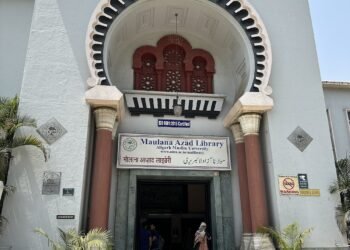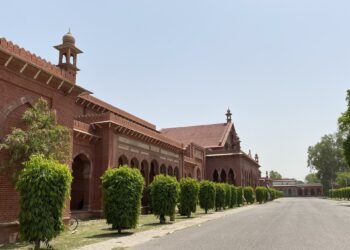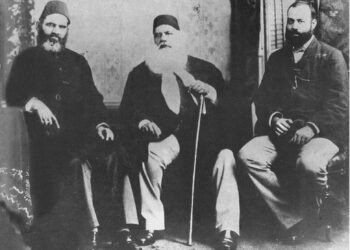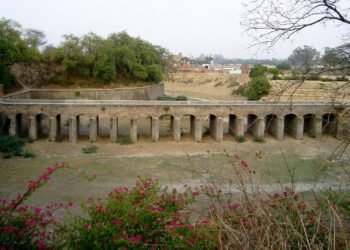
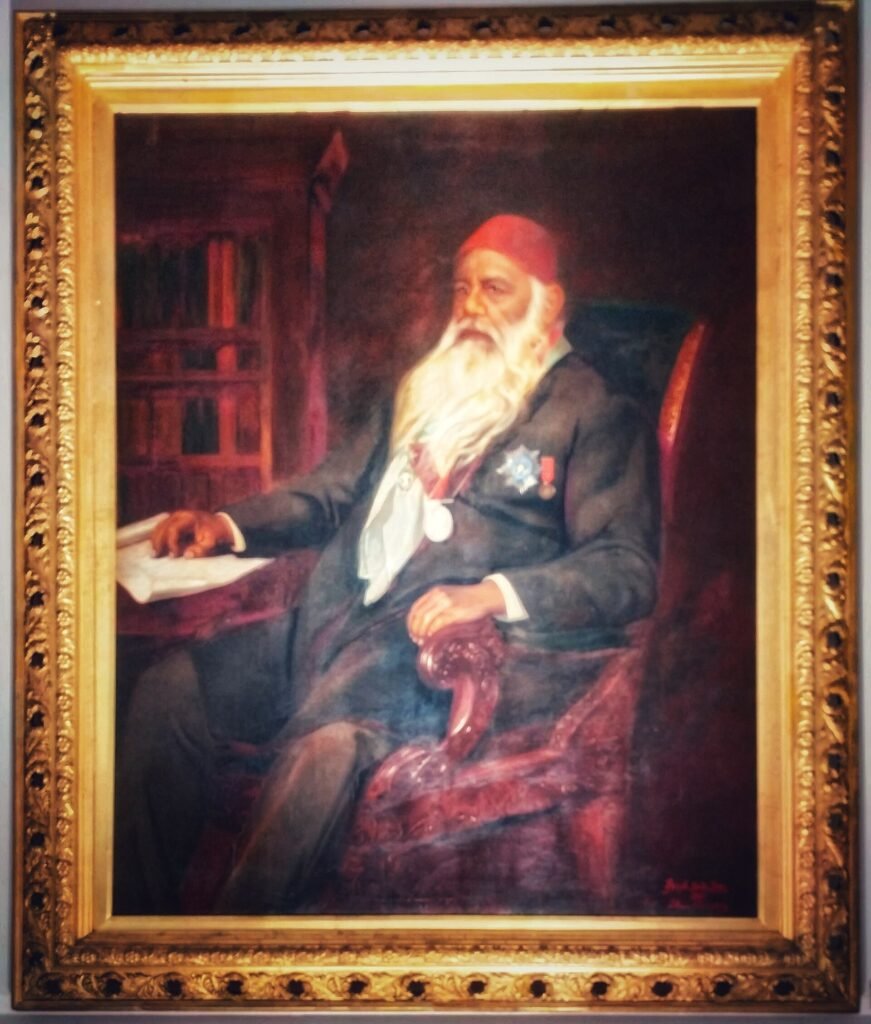
Sir Syed Ahmad Khan (1817 to 1898) was a Delhi-born scholar, judicial officer and reformer who founded the Madrasatul Uloom at Aligarh on 24 May 1875. It became the Muhammadan Anglo-Oriental (MAO) College in 1877 and, after the AMU Act came into force on 1 December 1920, Aligarh Muslim University.
His life is often told through speeches and anniversaries. This piece sets out the dates and facts that can be checked against the university’s own records and standard references, so that the story of AMU’s founder stands on firm ground.
Early life in Delhi
Syed Ahmad was born in Delhi on 17 October 1817, when the Mughal court still sat in the city. His father was Syed Muhammad Muttaqi and his mother was Aziz-un-Nisa.
 Also readHistory of AMU: From MAO College to University, 1875 to 1920
He grew up close to the Mughal court and received a traditional education in Persian and Arabic. In 1836 he married Parsa Begum. The couple had two sons, Syed Hamid and Syed Mahmood, and a daughter who died young.
A career in the East India Company’s courts
In 1838 he joined the service of the East India Company. He began as a serestadar in Delhi and moved through a series of judicial posts: naib munshi at Agra in 1839, munsif at Fatehpur Sikri in 1841, then Delhi in 1846 and sadr amin at Bijnor in 1855.
Later postings took him to Moradabad, Ghazipur, Aligarh and Banaras, where he served as a judge of the Small Causes Court. He retired in 1876 and settled permanently in Aligarh to work on the college full time.
During these years he also wrote. His Asar-us-Sanadid, a detailed survey of the monuments of Delhi, first appeared in 1847 and is still used by historians of the city.
1857 and its aftermath
When the revolt of 1857 broke out, he was posted at Bijnor. He helped shelter British officers and their families there. The upheaval hit his own family hard, and his mother died in Meerut in its aftermath.
In 1858 he wrote Asbab-e-Baghawat-e-Hind (The Causes of the Indian Revolt). The pamphlet argued that the British government’s distance from Indian opinion, and the lack of Indians in the legislature, had contributed to the crisis. It was an unusually direct document for a serving official to write.
| Quick facts | Details |
|---|---|
| Born | 17 October 1817, Delhi |
| Joined Company service | 1838 |
| Key books | Asar-us-Sanadid (1847), Asbab-e-Baghawat-e-Hind (1858), Tafsir ul-Quran (from 1880) |
| Journal | Tahzeeb-ul-Akhlaq, launched 24 December 1870 |
| School opened at Aligarh | 24 May 1875 |
| College foundation stone | 8 January 1877, laid by Viceroy Lord Lytton |
| Knighthood (KCSI) | 1888 |
| Died | 27 March 1898, Aligarh |
Schools, translations and the Scientific Society
Sir Syed’s educational work began well before Aligarh. He opened a school at Moradabad around 1858 to 1859 (sources differ on the year) and another at Ghazipur in 1863.
In 1864 he set up the Scientific Society, which translated English works on science, history and other modern subjects into Urdu. It moved to Aligarh when he was posted there and became the Scientific Society of Aligarh. The society also published the Aligarh Institute Gazette, a bilingual paper.
The England visit and a new plan
In April 1869 he sailed for England with his sons Syed Mahmood and Syed Hamid. Mahmood had won a scholarship to study there. He stayed in Britain until 1870 and closely observed how Oxford and Cambridge were organised, from residential colleges to the role of games and debate.
He came back with a clear idea: a residential college for Indian Muslims that combined modern Western learning with religious education. On 24 December 1870 he launched Tahzeeb-ul-Akhlaq, a journal on social reform, to argue the case in Urdu.
Founding the college at Aligarh
A committee for the spread of learning among Indian Muslims was set up in December 1870, with Sir Syed as secretary, and began raising funds. Aligarh was chosen as the site in 1872.
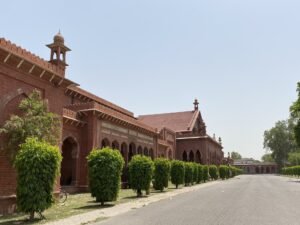
The school, Madrasatul Uloom Musalmanan-e-Hind, formally opened on 24 May 1875, the birthday of Queen Victoria. On 8 January 1877, Viceroy Lord Lytton laid the foundation stone of the college building, and the institution became the Muhammadan Anglo-Oriental College that year.
The MAO College admitted students of all faiths from its early years and was modelled on the Oxford and Cambridge residential system. For a fuller timeline from 1875 to 1920, see our history section.
Public life and later years
Sir Syed was nominated to the Imperial Legislative Council in 1878 and served until 1883. He later sat on the provincial council of the North-Western Provinces from 1887 to 1893.
In 1886 he founded the Muhammadan Educational Conference, whose annual sessions carried the Aligarh message to other parts of India. He received the KCSI in the 1888 New Year Honours, and the University of Edinburgh gave him an honorary LLD in 1889.
His religious writing drew strong criticism from conservative scholars, who objected to his rational reading of scripture in works such as Tabyin-ul-Kalam and his Tafsir ul-Quran. He continued writing despite the opposition.
Death and legacy
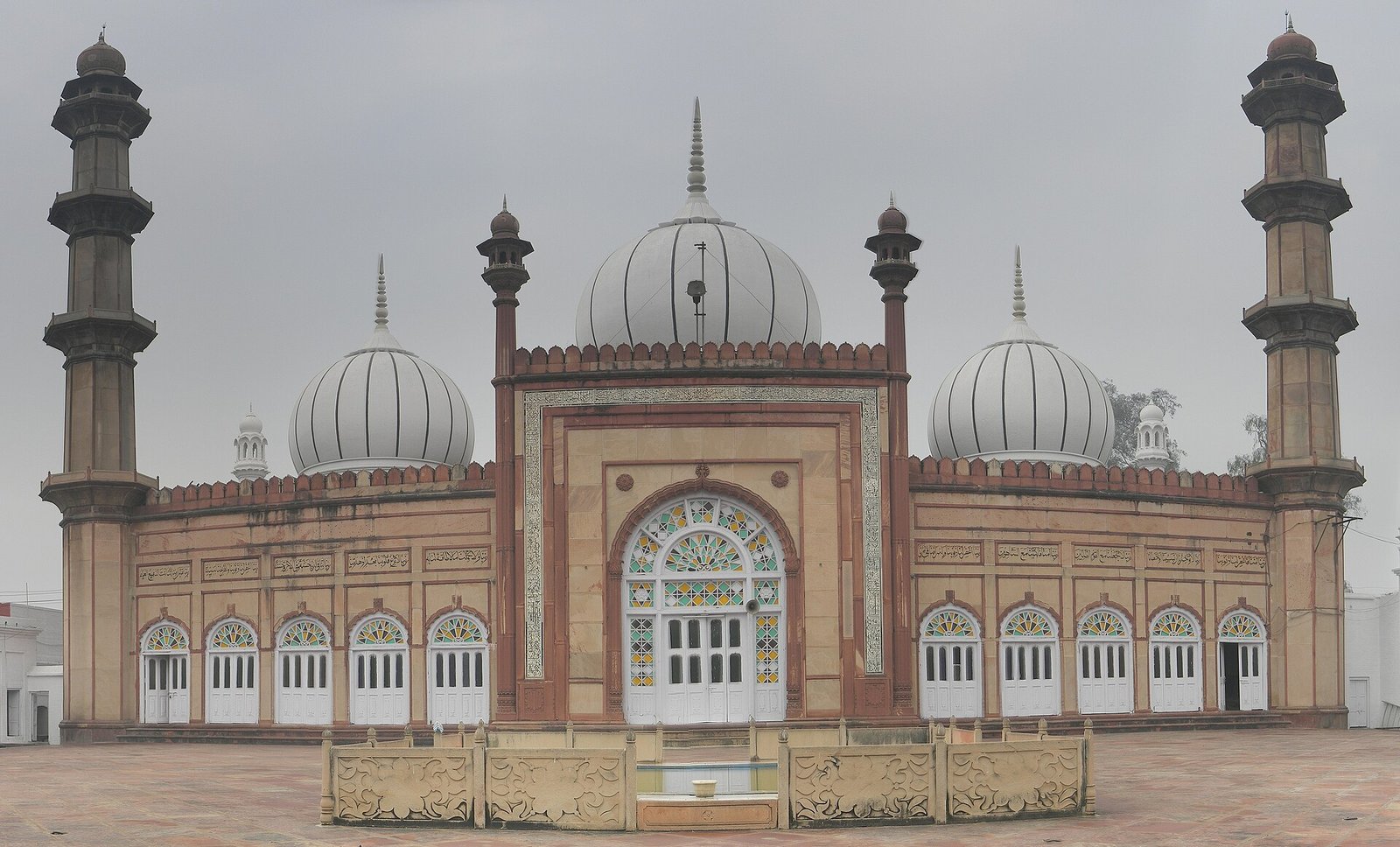
Sir Syed died at Aligarh on 27 March 1898. He is buried beside the Sir Syed Masjid (the university’s Jama Masjid) on the AMU campus, a site visited by students and alumni every year.
His birthday, 17 October, is marked as Sir Syed Day by AMU and by Aligarh alumni associations around the world. The college he built became a university 22 years after his death. Current campus news is covered in our AMU updates section.
Frequently asked questions
When was Sir Syed Ahmad Khan born and when did he die?
He was born in Delhi on 17 October 1817 and died in Aligarh on 27 March 1898.
When did Sir Syed found AMU?
He opened the school at Aligarh on 24 May 1875. It became MAO College in 1877, and the college became Aligarh Muslim University under the AMU Act, which came into force on 1 December 1920.
Where is Sir Syed Ahmad Khan buried?
He is buried next to the Sir Syed Masjid on the AMU campus in Aligarh.
Why is Sir Syed Day celebrated on 17 October?
17 October is his date of birth. AMU and alumni groups mark it each year with lectures, dinners and events in his memory.
Sources: AMU: History, Wikipedia: Syed Ahmad Khan, Wikipedia: History of Aligarh Muslim University.