
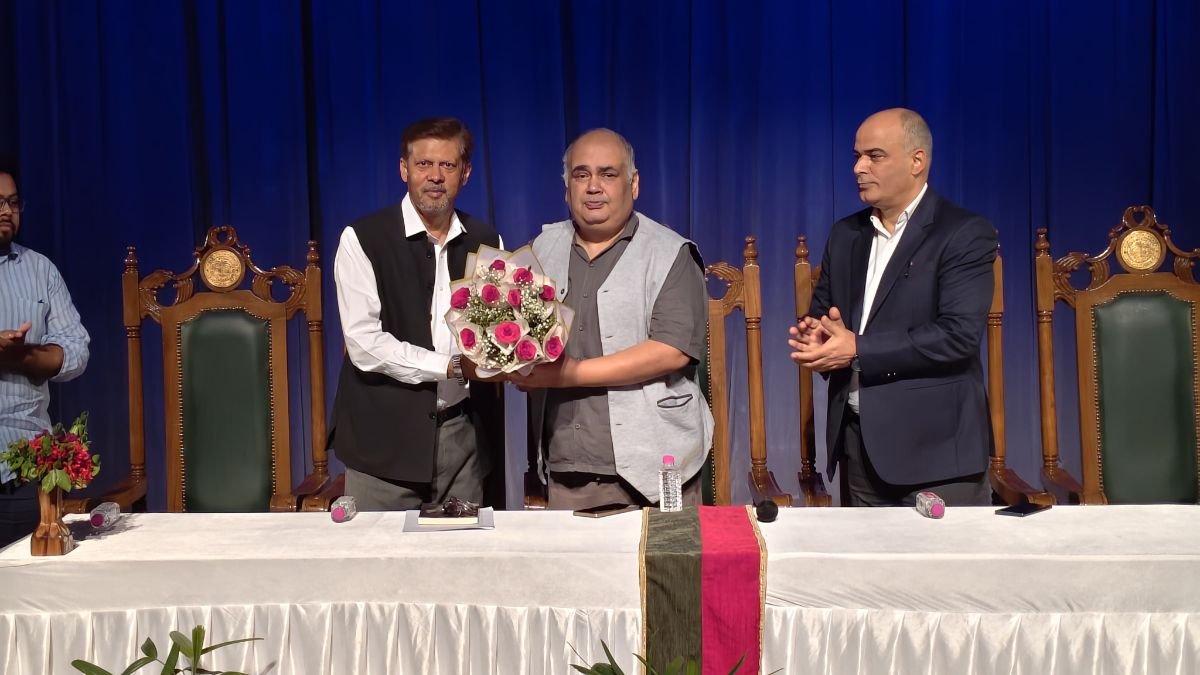
AMU alumnus Saif Hyder Hasan, the playwright, director and producer, led a four-day film and theatre workshop at the Cultural Education Centre (CEC) of Aligarh Muslim University from 16 to 19 November 2026. By the last day, student participants had written, shot, edited and screened six short films of their own.
The workshop was organised jointly by the University Drama Club and the University Film Club. It was inaugurated by Prof. M. Rizwan Khan, Coordinator of the CEC, at the Kennedy Auditorium.
What happened, day by day
Day one, 16 November: The opening session, titled “Rasm-e-Ulfat”, asked students to speak freely about their experiences and what they notice around them. Mr Hasan showed how these personal thoughts can become the seed of a story. The group ended the day with a pool of ideas to work on.
 Also readAMUOBA Kuwait celebrates Sir Syed Day 2026 with Indian Ambassador, gives first Founder’s Award
Day two, 17 November: At the Kennedy Auditorium, the ideas were cut down to one-liners, each holding a whole story in a single thought. Students then built scripts around them, working on characters, situations and dialogue.
Day three, 18 November: Students went out across the campus in teams, picked locations, shot their films and began editing. Mr Hasan stayed with them and gave practical advice on framing, performance and editing.
Day four, 19 November: At the Wisdom Hall of the CEC, six short films made by the participants were screened. Mr Hasan reviewed each one, pointing out what worked and what could be better, followed by an open feedback session.
Who is Saif Hyder Hasan
Mr Hasan began as a copywriter and later worked as a journalist. His theatre journey started in 1996 with Pierrot’s Troupe in New Delhi, where he worked as playwright, actor and stagehand. He moved to Mumbai in 2002.
His plays include Ek Mulaqaat, which imagines a meeting between the poets Sahir Ludhianvi and Amrita Pritam, with Shekhar Suman and Deepti Naval; Gardish Mein Taare, inspired by the lives of Guru Dutt and Geeta Dutt; and Mr and Mrs Murarilal, led by Satish Kaushik. He has also adapted a short story by Gulzar for the stage, written a radio drama for the BBC World Service Trust, and published a memoir collection, One Yesterday.
What students and teachers said
Many students said the “Rasm-e-Ulfat” session gave them the confidence to talk about their own lives and trust that their experiences were worth turning into stories. For several of them it was the first time they had taken an idea from one line on paper to a finished film. Drama Club members said they learnt how the camera changes an actor’s performance, while Film Club members said working with actors taught them to think more about character and emotion.
Presiding over the valedictory session, Prof. M. Rizwan Khan said the CEC exists to nurture talent, not just to stage events. He said workshops like this should become a regular part of campus life, because sustained practice, not a single day of applause, is what shapes an artist.
Mr Hasan said that coming back to AMU, where his own creative journey began, felt like coming home, and that he hopes to keep returning to work with students. Prof. Farooq Ahmad Dar, President of the University Film Club, and Prof. Vibha Sharma, Mentor of the University Drama Club, also spoke. Dr. Mohammad Hanif Ahmad, Mentor of the Film Club, and Dr. Mohammad Sharjeel Chaudhary, President of the Drama Club, were present.
Why it matters for Aligs
Campus workshops led by successful alumni are one of the ways AMU students get a direct line into the creative industries. If you are interested in the Drama Club or the Film Club, the CEC is the place to ask about future sessions. For more campus stories, read how Prof. Irfan Habib spoke to Women’s College students and how AMUOBA Kuwait celebrated Sir Syed Day 2026.
Frequently asked questions
Who conducted the filmmaking workshop at AMU?
AMU alumnus Saif Hyder Hasan, a noted playwright, director and producer, conducted the four-day workshop.
When and where was the AMU film workshop held?
It ran from 16 to 19 November 2026 at the Cultural Education Centre. Sessions were held at the Kennedy Auditorium, across the campus for shooting, and at the CEC Wisdom Hall for the final screening.
Who organised it?
The University Drama Club and the University Film Club of the Cultural Education Centre jointly organised it.
How many films did students make?
Participants made six short films, which were screened and reviewed on the last day.