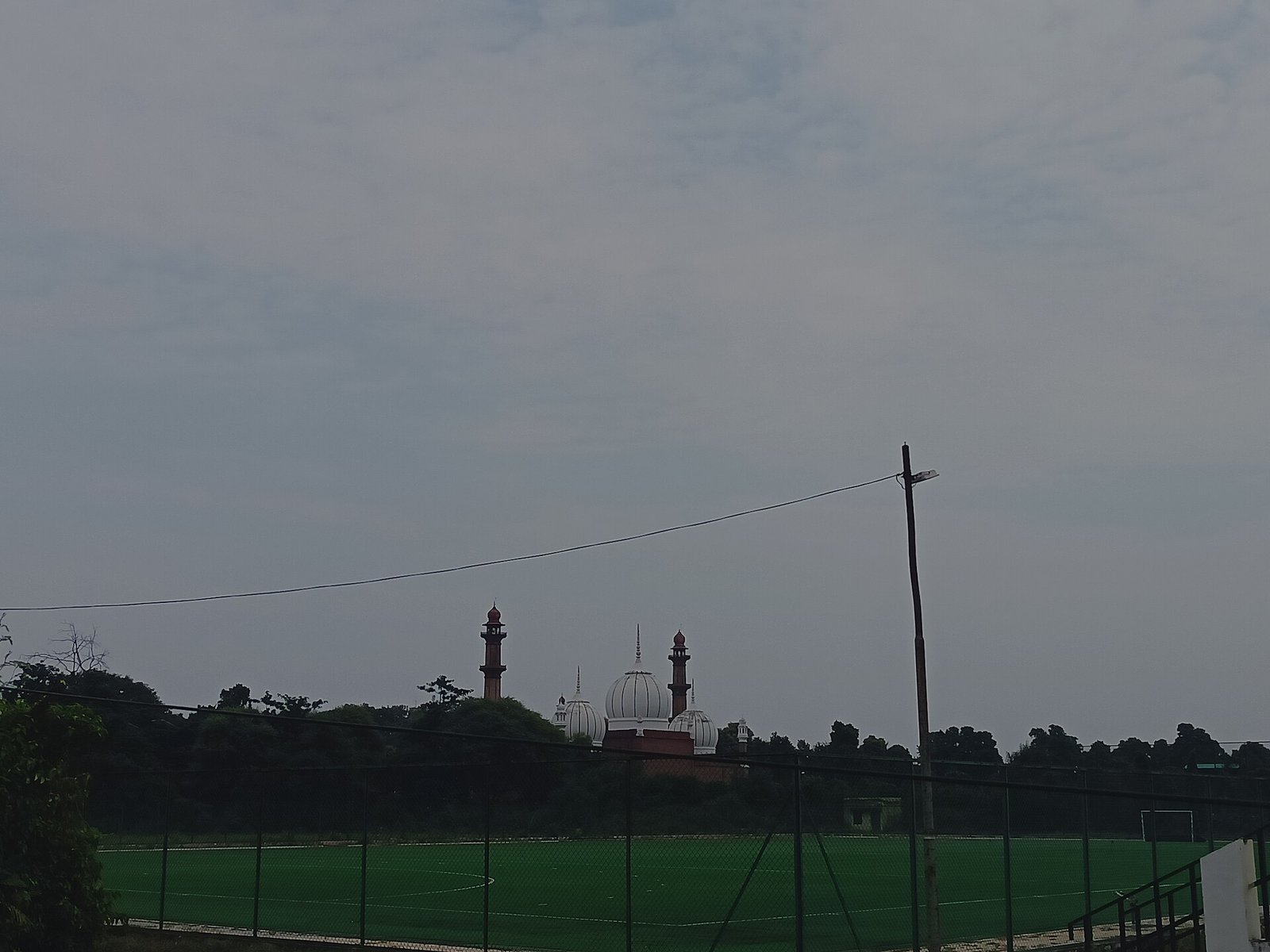
Aligarh Muslim University began as a small school on 24 May 1875, became the Muhammadan Anglo-Oriental College in 1877 and turned into a university in 1920. Along the way it picked up a famous library, a debating club older than most Indian universities, centres in three other states and a long list of firsts.
The facts below have been checked against university records, official rankings and national newspapers. Where a figure comes from a single source, we say so.
1. It started as a school, not a university
Sir Syed Ahmad Khan opened the Muhammadan Anglo-Oriental Collegiate School in Aligarh on 24 May 1875. Two years later, in 1877, it was raised to the level of a college, the MAO College.
 Also readWhy Aligarh Is Called the City of Locks: The Full Story
The college became Aligarh Muslim University in 1920, when the Aligarh Muslim University Act was passed. So the institution is older than its university status by 45 years.
Why it matters: This is why Aligs mark 1875 as the founding year and 1920 as the centenary year of the university.
2. The founder was born in Delhi and is buried on campus
Sir Syed was born in Delhi on 17 October 1817 and died in Aligarh on 27 March 1898. He is buried next to the Sir Syed Masjid on the university grounds, inside the oldest part of the campus.
His birth anniversary, 17 October, is observed every year as Sir Syed Day by the university and by alumni groups across India and abroad.
3. Its first Chancellor was a woman ruler
When the university was set up in 1920, Begum Sultan Jahan, the ruler of Bhopal, was appointed its first Chancellor. A 2024 PTI report noted that she remains the only woman to have held that office.
The Chancellor’s post at AMU is largely ceremonial. The Vice Chancellor runs the university day to day.
4. The first woman Vice Chancellor came in 2024
In April 2024, Professor Naima Khatoon was appointed Vice Chancellor for a five-year term, with the approval of President Droupadi Murmu as the Visitor. She was the first woman to hold the post in more than 100 years of the university.
Before this, she had been principal of the AMU Women’s College since 2014. She did her PhD in psychology at AMU and joined the same department as a lecturer in 1988.
5. The Women’s College began with five girls
The AMU Women’s College traces its roots to a girls’ school started on 19 October 1906 by Sheikh Abdullah, remembered in Aligarh as Papa Mian. The school opened with five students and one teacher.
It became an undergraduate college in 1937. Today it is one of the best known parts of the university, and its former principal now heads AMU.
6. The library was first named after a Viceroy
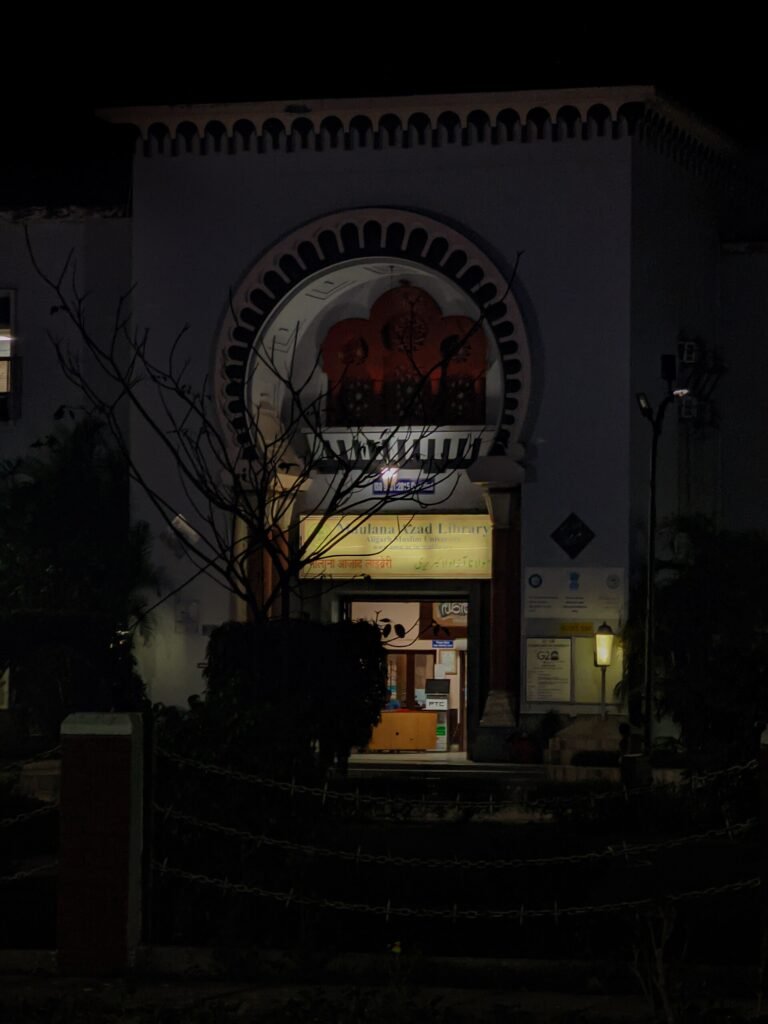
The foundation of what is now the Maulana Azad Library was laid in 1877, and it was first called the Lytton Library. Its seven-storey building was inaugurated in 1960 by Prime Minister Jawaharlal Nehru, and the library was renamed after Maulana Abul Kalam Azad.
The collection includes royal decrees issued by Mughal emperors, along with old manuscripts. Apart from the central library, there are more than 100 departmental and college libraries.
Why it matters: The library is one of the oldest continuously used parts of the original college.
7. The debating club dates to 1884
The Siddons Union Club, AMU’s debating society, was set up in 1884. It is named after Henry George Impey Siddons, the first principal of the MAO College.
Over the years its hall has hosted Mahatma Gandhi, Jawaharlal Nehru, Maulana Abul Kalam Azad and the Dalai Lama. Union debates remain a big part of campus life.
8. Sir Syed Hall holds the oldest buildings
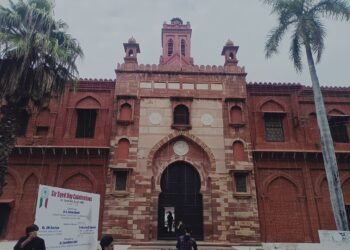
Sir Syed Hall is the oldest residential hall of the university. It houses Strachey Hall, the old Lytton Library building, the Sir Syed Masjid and Victoria Gate, the clock tower that appears on many AMU photographs.
The hall is now split into Sir Syed North and Sir Syed South, but its buildings are still the image most people have of AMU.
9. Students live in 19 residential halls
AMU is a residential university. It has 19 halls of residence, 13 for men and 6 for women, which together run around 80 hostels.
Each hall has a provost and its own dining hall customs and annual functions. Freshers are allotted a hall in their first year, and the hall becomes their address on campus.
10. AMU has centres in three other states
Outside Aligarh, the university runs centres at Malappuram in Kerala, Murshidabad in West Bengal and Kishanganj in Bihar. These centres run a limited set of courses compared with the main campus.
A site for a further centre in Aurangabad, Maharashtra, has been identified, though it is not yet running.
11. Its graduates have their own title
AMU graduates are called Aligs, and many add “Alig” after their names. Journalist Mohammed Wajihuddin, in his history of the university published by HarperCollins India, compares this with how graduates of some seminaries carry their institution’s name.
The word is used widely by alumni associations in India, the Gulf and North America.
12. A student wrote the university anthem
The AMU Tarana was written by the Urdu poet Asrarul Haq Majaz while he was a student at Aligarh in the 1930s. An abridged version of his poem “Nazr-e-Aligarh” is sung as the anthem today.
It is sung at convocations, Sir Syed Day functions and alumni dinners around the world. You can read more on our Infotainment pages.
13. AMU appears in Hindi films from the 1960s
The 1963 film Mere Mehboob, directed by H.S. Rawail, used the AMU campus as its backdrop. Its opening scene shows a residential hall and Victoria Gate.
The 1966 film Nai Umar Ki Nai Fasal, starring Tanuja and Rajeev, was also shot on the campus.
14. It ranks among India’s top 10 universities
In the National Institutional Ranking Framework (NIRF) 2024, released by the Ministry of Education, AMU was placed 8th in the universities category. Rankings change every year, so check the latest list on the NIRF website before quoting a number.
The university’s medical and engineering colleges are also ranked separately in their own NIRF categories.
AMU quick facts
| Item | Detail |
|---|---|
| Founded as school | 24 May 1875 |
| Became MAO College | 1877 |
| University status | 1920, AMU Act |
| Founder | Sir Syed Ahmad Khan (1817 to 1898) |
| Campus area | About 467 hectares (around 1,155 acres) |
| Residential halls | 19 (13 for men, 6 for women) |
| Centres outside Aligarh | Malappuram, Murshidabad, Kishanganj |
| First woman Vice Chancellor | Prof. Naima Khatoon, appointed April 2024 |
| NIRF 2024 (universities) | 8th |
For the full story of how the college grew into a university, see our History section, and follow current campus news under AMU Updates.
Frequently asked questions
When was Aligarh Muslim University founded?
It began as the Muhammadan Anglo-Oriental Collegiate School on 24 May 1875, became MAO College in 1877 and became Aligarh Muslim University in 1920.
Who was the first woman Vice Chancellor of AMU?
Professor Naima Khatoon, appointed in April 2024. She was earlier principal of the AMU Women’s College.
Why are AMU students called Aligs?
“Alig” is short for Aligarian. Graduates use it as a mark of identity, and many write it after their names.
Where are the AMU centres outside Aligarh?
At Malappuram in Kerala, Murshidabad in West Bengal and Kishanganj in Bihar.
Sources: The Tribune (PTI), April 2024; NIRF, Ministry of Education; Scroll.in book extract; Wikipedia (background).