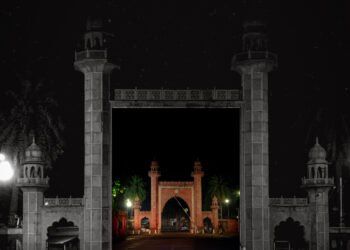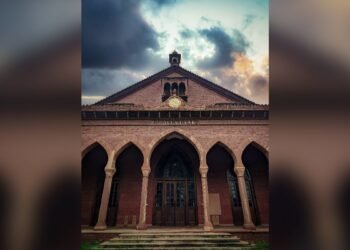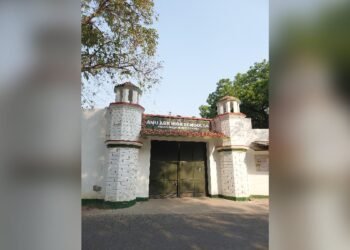

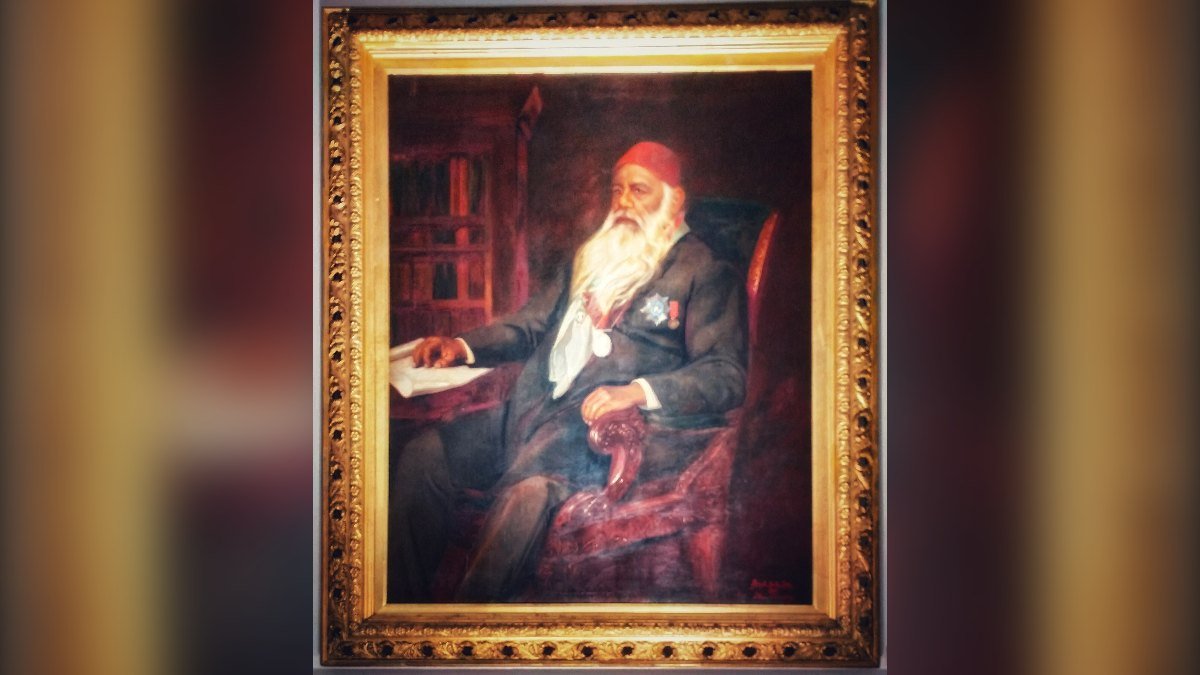
Sir Syed Ahmad Khan (1817-1898) was a judicial officer, scholar and reformer who founded the Muhammadan Anglo-Oriental (MAO) College at Aligarh, the institution that became Aligarh Muslim University in 1920. He was born in Delhi on 17 October 1817 and died in Aligarh on 27 March 1898. His birthday is marked every year by Aligs around the world as Sir Syed Day.
Sir Syed Ahmad Khan at a glance
| Born | 17 October 1817, Delhi |
| Died | 27 March 1898, Aligarh |
| Resting place | Beside the University Mosque (Sir Syed Masjid), AMU campus |
| Parents | Syed Muhammad Muttaqi and Aziz-un-Nisa |
| Children | Syed Hamid, Syed Mahmood and a daughter, Ameena |
| Career | East India Company and British judicial service, 1838-1876 |
| Best known for | MAO College, the Scientific Society, Tahzib-ul-Akhlaq and the Aligarh Movement |
| Honours | CSI (1869), KCSI knighthood (1888), honorary LLD, University of Edinburgh (1889) |
Early life in Delhi
Sir Syed came from a family with ties to the Mughal court. His maternal grandfather, Khwaja Fariduddin, had served as a wazir. He was the youngest of three children and was taught at home: the Quran, Persian, Arabic, mathematics, astronomy and some medicine.
His father’s death in 1838 left the family short of money. Formal schooling ended, though he kept studying on his own, and he took up government service the same year.
 Also readAMU Minority Status Case Explained: 1967 to the 2024 Verdict
Judicial career, 1838 to 1876
He began as a serestadar (clerk) in the criminal department at Delhi and rose through the judicial ranks over almost four decades. His postings took him across north India, which shaped his view of how Muslims were falling behind in modern education.
- Naib Munshi at Agra (1839)
- Munsif at Fatehpur Sikri (1841), then Delhi from 1846
- Sadr Amin at Bijnor (1855)
- Moradabad (1858), Ghazipur (1862) and Aligarh (1864)
- Small Causes court at Banaras, until he retired in 1876
1857 and Asbab-e-Baghawat-e-Hind
Sir Syed was posted at Bijnor when the revolt of 1857 broke out, and he helped protect British officers and their families there. He wrote about the events in Bijnor soon after.
His most cited work from this period is Asbab-e-Baghawat-e-Hind (The Causes of the Indian Revolt), written in 1859. He rejected the claim that Muslim elites had planned the revolt and laid the blame on the East India Company’s expansion and on British officials who did not understand Indian society. It was a bold position for a serving official to take so soon after 1857.
Books and journals
Sir Syed wrote on history, religion and society throughout his life. His main works include:
- Asar-us-Sanadid (1847): a detailed record of the monuments and buildings of Delhi.
- Asbab-e-Baghawat-e-Hind (1859): on the causes of the 1857 revolt.
- Tabyin-ul-Kalam (1862-1865): a Muslim commentary on the Bible, published in parts.
- Khutbat-e-Ahmadiya: essays written in reply to William Muir’s biography of the Prophet, published in English in 1870 as Essays on the Life of Mohammed.
- Tafsir-ul-Quran: a commentary on the Quran, begun in 1877.
He started the journal Tahzib-ul-Akhlaq on 24 December 1870. It argued for social reform, rational thinking and modern education, and it influenced the style of Urdu prose that followed.
Schools, the Scientific Society and the road to Aligarh
Before Aligarh, he set up schools at Moradabad and at Ghazipur (1863). In Ghazipur he also formed the Scientific Society to translate Western works on science and other subjects into Urdu. The society moved with him to Aligarh in 1864.
On 1 April 1869 he left for England with his sons Syed Mahmood and Syed Hamid, returning the following year. He visited English colleges there and came back with a plan for a residential college for Indian Muslims, one he hoped would grow into a university like Oxford or Cambridge.
Founding MAO College
In December 1870 he set up a committee for the educational progress of Muslims, which planned the college and raised funds from the community. The school opened at Aligarh on 24 May 1875. In January 1877, the Viceroy Lord Lytton laid the foundation stone of the Muhammadan Anglo-Oriental College. The residential system, the halls and the culture of debate that Aligs know today go back to this college.
In 1886 Sir Syed also started the Muhammadan Educational Conference, which took his campaign for modern education to Muslims across India. The full story of how the college grew into a university is in our history of AMU from MAO College to university.
Public life and honours
Sir Syed served as an additional member of the Imperial Legislative Council from 1878 to 1883, and later on the Lieutenant Governor’s council from 1887 to 1893. He was made a Companion of the Order of the Star of India in 1869 and knighted (KCSI) in the 1888 New Year Honours. The University of Edinburgh gave him an honorary LLD in 1889.
Death and legacy
Sir Syed died at Aligarh on 27 March 1898 and was buried beside the mosque on the college campus. Twenty-two years later, the Aligarh Muslim University Act of 1920 turned his college into a university.
His wider effort, known as the Aligarh Movement, pushed for modern education, scientific thinking and social reform among Indian Muslims. Our Aligarh Movement explainer covers its aims and the people who carried it forward. His influence also explains why AMU students and alumni are called Aligs.
Sources: AMU, Britannica.
Frequently asked questions
When was Sir Syed Ahmad Khan born?
He was born in Delhi on 17 October 1817. The date is marked every year as Sir Syed Day.
Where is Sir Syed Ahmad Khan buried?
He is buried beside the University Mosque (Sir Syed Masjid) on the AMU campus in Aligarh.
What are Sir Syed Ahmad Khan’s famous books?
Asar-us-Sanadid (1847), Asbab-e-Baghawat-e-Hind (1859), Tabyin-ul-Kalam, Khutbat-e-Ahmadiya and Tafsir-ul-Quran. He also founded the journal Tahzib-ul-Akhlaq in 1870.
When did MAO College become AMU?
The Aligarh Muslim University Act of 1920 turned MAO College into Aligarh Muslim University.