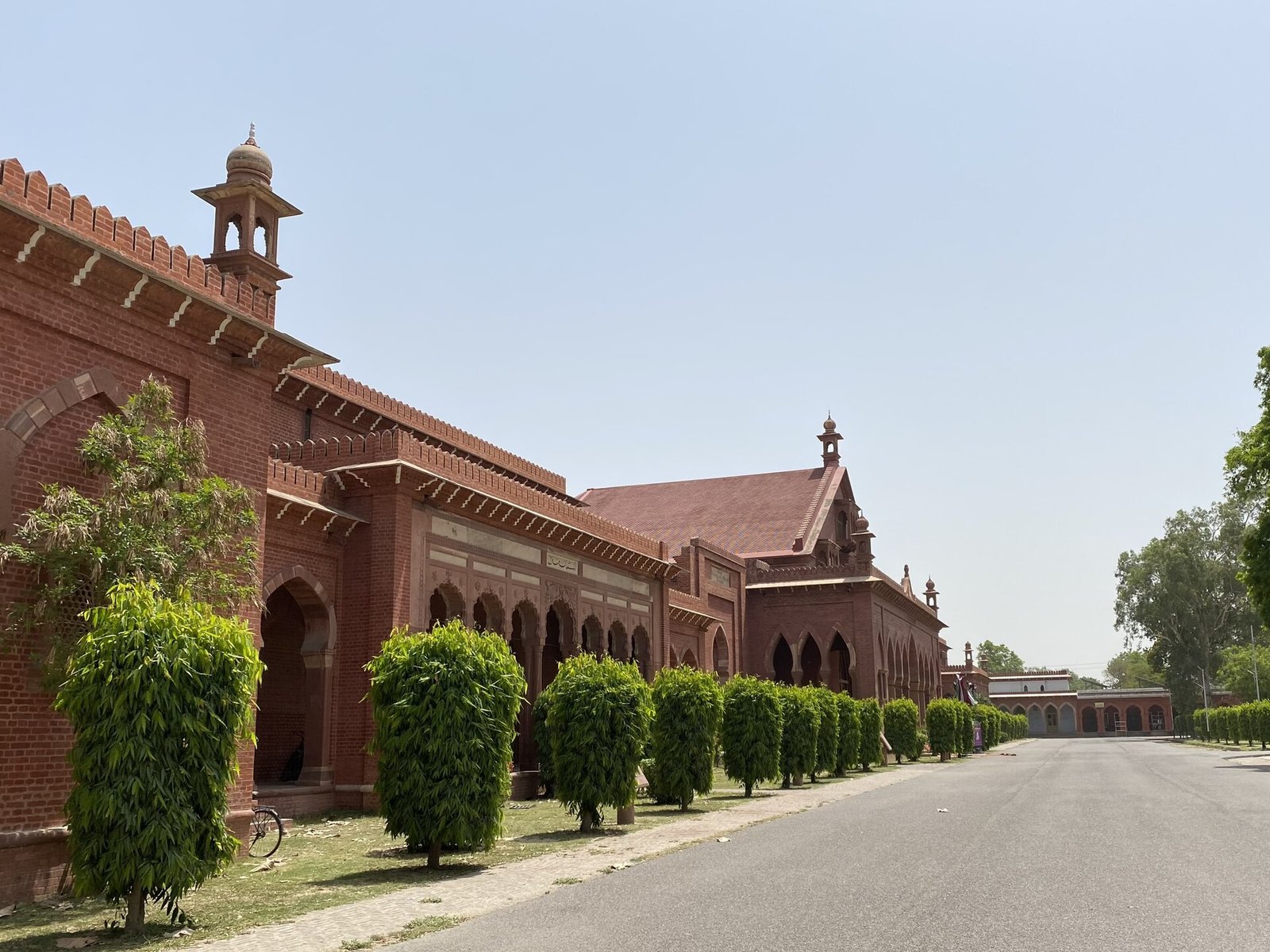
Aligarh Muslim University grew in three main stages. Sir Syed Ahmad Khan’s school, the Madrasatul Uloom, opened at Aligarh on 24 May 1875. It became the Muhammadan Anglo-Oriental (MAO) College in 1877, and the Aligarh Muslim University Act, 1920, which came into force on 1 December 1920, turned the college into a university.
The 45 years between the first classroom and the university charter involved fundraising across India, a new style of residential college and a long campaign for a university. Below is the sequence, with dates drawn from AMU’s own history page and standard references.
Timeline at a glance
| Year | Milestone |
|---|---|
| 1864 | Sir Syed sets up the Scientific Society, later based at Aligarh |
| 1869 to 1870 | Sir Syed visits England and studies the Oxford and Cambridge model |
| 26 December 1870 | A committee to spread learning among Indian Muslims is formed, with Sir Syed as secretary |
| 1872 | Aligarh is chosen as the site for the proposed college |
| 24 May 1875 | Madrasatul Uloom Musalmanan-e-Hind opens at Aligarh |
| 8 January 1877 | Viceroy Lord Lytton lays the foundation stone; the institution becomes MAO College |
| 1884 | Siddons Union Club founded; foundation stone of Victoria Gate laid |
| 1885 | College affiliated to Allahabad University |
| 1886 | Muhammadan Educational Conference founded |
| 27 March 1898 | Sir Syed dies; a memorial fund is started to clear debts and push for a university |
| 1901 | Viceroy Lord Curzon visits the college |
| 1906 | Sheikh Abdullah starts a girls’ school in Aligarh |
| September 1920 | The Aligarh Muslim University Act is enacted |
| 1 December 1920 | The Act comes into force and MAO College becomes AMU |
The groundwork: 1864 to 1872
Sir Syed’s earlier schools at Moradabad and Ghazipur, and the Scientific Society he founded in 1864, were small steps. The bigger plan took shape after his visit to England in 1869 and 1870, where he saw how residential colleges worked at Oxford and Cambridge.
 Also readThe Aligarh Movement Explained: Aims, Key Figures and Legacy
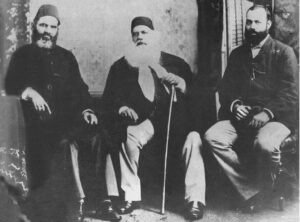
On 26 December 1870, a committee for the better spread and advancement of learning among Indian Muslims was set up, with Sir Syed as its secretary. His son Syed Mahmood, back from England in 1872, drafted a proposal for an independent university. The same year Aligarh was chosen as the site, and Lieutenant-Governor John Strachey later allotted land for the campus.
1875: the Madrasatul Uloom opens
The school, Madrasatul Uloom Musalmanan-e-Hind, formally opened on 24 May 1875. The opening was timed to Queen Victoria’s birthday.
It began at a modest scale and taught both English and Oriental subjects. Sir Syed retired from government service in 1876 and moved to Aligarh for good to run the project.
1877: the Muhammadan Anglo-Oriental College
On 8 January 1877, Viceroy Lord Lytton laid the foundation stone of the college. From that year the institution was known as the Muhammadan Anglo-Oriental College. The first principal was Henry George Impey Siddons, after whom the Siddons Union Club, founded in 1884, was named.
The college was residential, with students living in hostels, eating together and taking part in sport and debate. It was first linked to the University of Calcutta for matriculation examinations, and in 1885 it became affiliated to Allahabad University.
Growth after Sir Syed: 1898 to 1919
Sir Syed died on 27 March 1898. A memorial fund was set up in his name to clear the college’s debts and work towards a university. Theodore Beck, the second principal, died in 1899, and Theodore Morison took over.
Physical growth went on through these years. The foundation stone of Victoria Gate, one of the campus’s best-known buildings, had been laid in 1884, and the cricket club started in 1878 was part of a strong sporting culture that the college promoted from the start.
Viceroy Lord Curzon visited in 1901 and praised the college’s work. Women’s education also began in this period: Sheikh Abdullah started a girls’ school in Aligarh in 1906 (AMU’s own history page gives 1907). That school later grew into what is now the Women’s College.
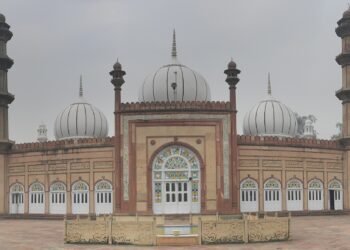
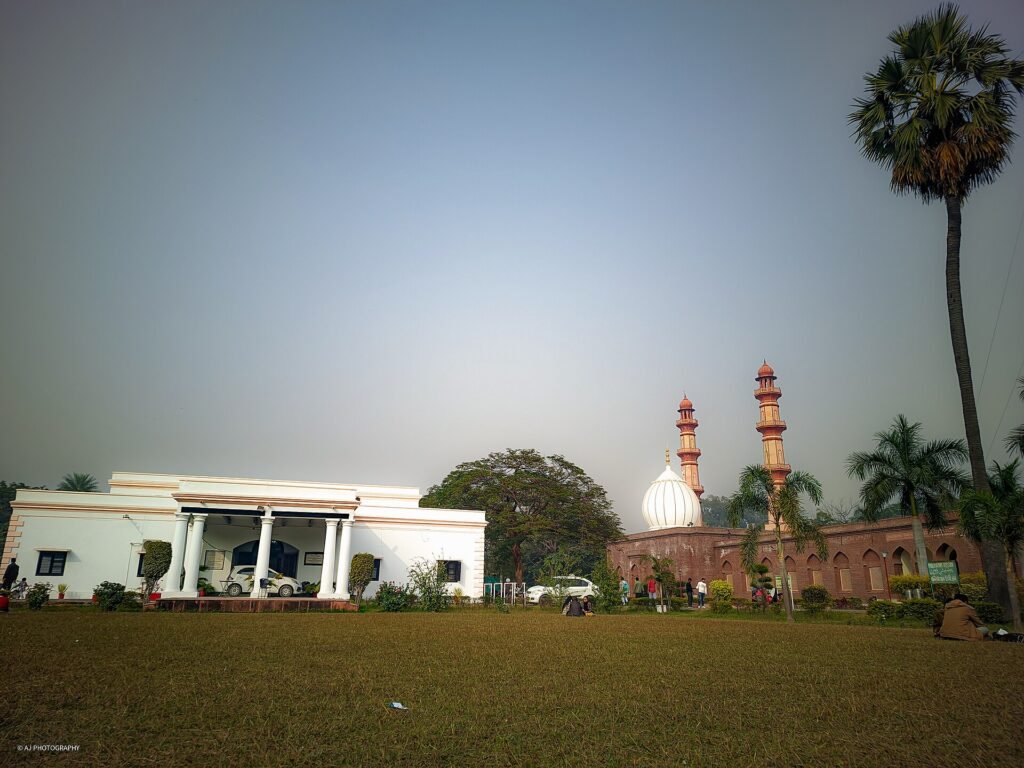
The Jama Masjid on campus, begun in 1879, was completed and inaugurated in 1915. In 1918 the Nizam of Hyderabad, Mir Osman Ali Khan, made a large donation to the college.
1920: the AMU Act
After years of negotiation with the government, the Aligarh Muslim University Act was enacted in September 1920. It came into force on 1 December 1920 and incorporated a teaching and residential university at Aligarh, with MAO College as its core.
The first vice-chancellor was the Raja of Mahmudabad. Sultan Jahan Begum, the ruler of Bhopal, became the first chancellor, and Aga Khan III was pro-chancellor. The government agreed to an annual grant of Rs 1 lakh for the new university. In October that year Mahatma Gandhi spoke at Aligarh, and some students and teachers left to start Jamia Millia Islamia, which later moved to Delhi.
After 1920: key legal milestones
The 1920 Act has been amended several times, including in 1951, 1965, 1972 and 1981. The 1981 amendment described AMU as an institution established by the Muslims of India. In 2005 and 2006, the Allahabad High Court struck down the provision related to minority status.
In November 2024, a seven-judge bench of the Supreme Court, by a 4:3 majority, overruled its 1967 Azeez Basha judgment and set out tests for minority status. It left the final decision on AMU’s status to a regular bench. The matter remains before the court, and our news section follows developments.
The university marked its centenary in 2020, with Prime Minister Narendra Modi addressing the celebrations online in December that year. More on the founder is in our history section.
Frequently asked questions
When was MAO College founded?
The school opened on 24 May 1875. The college’s foundation stone was laid by Lord Lytton on 8 January 1877, and it was known as Muhammadan Anglo-Oriental College from 1877.
When did MAO College become Aligarh Muslim University?
The AMU Act, 1920 came into force on 1 December 1920, and MAO College became Aligarh Muslim University.
Who was the first vice-chancellor of AMU?
The Raja of Mahmudabad was AMU’s first vice-chancellor, and Sultan Jahan Begum of Bhopal was the first chancellor.
What was the original name of AMU?
It began as Madrasatul Uloom Musalmanan-e-Hind in 1875 and was then called the Muhammadan Anglo-Oriental College until 1920.
Sources: AMU: History, Wikipedia: History of Aligarh Muslim University, Wikipedia: Aligarh Muslim University Act, AMU: Important landmarks.