
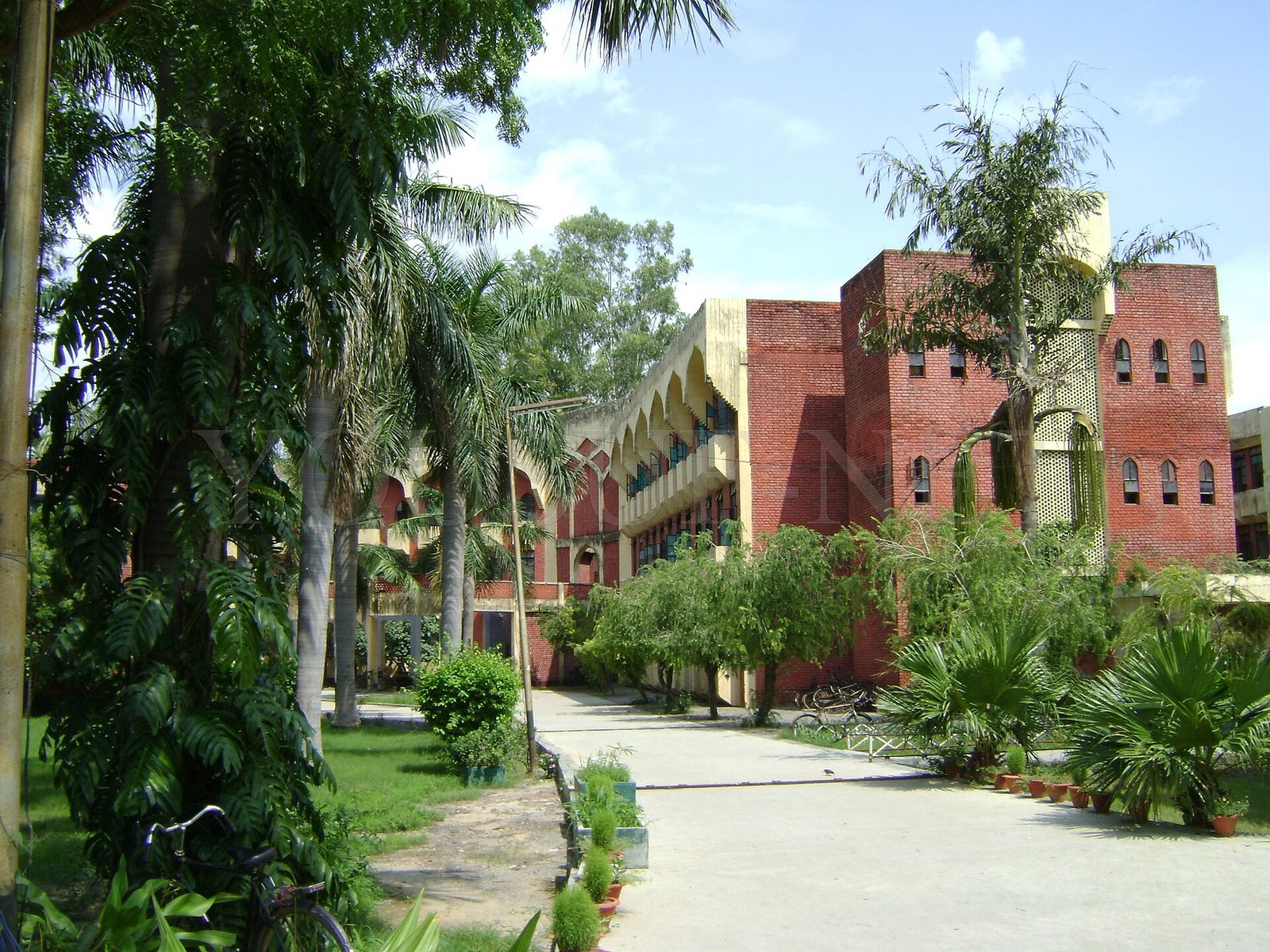
The main places to visit in Aligarh are the 16th-century Aligarh Fort, the Aligarh Muslim University campus with the Sir Syed Academy Museum, the Jama Masjid at Upper Kot, Khereshwar and Achaleshwar temples, Teerthdham Mangalayatan on the Agra road and the Shekha bird sanctuary. Most can be covered in two days.
Aligarh, once known as Koil, is better known for its locks and its university than for tourism. That keeps most sites uncrowded. The district administration lists eight official tourist places, and the ten below include all of them plus two places with strong local following. For more on the city, see our Aligarh section.
1. Aligarh Fort
The fort was built in 1524 to 1525 by Muhammad, son of Umar, the governor of Kol, during the reign of Ibrahim Lodi. It was later rebuilt by Sabit Khan, a Mughal governor, and then strengthened under the Scindias with the help of French officers Benoit de Boigne and Pierre Perron. Its present shape is largely their work.
 Also readAMU Campus Landmarks: 10 Iconic Buildings, Gates and Museums
In 1803 the British under Lord Lake captured it from the Marathas in the Battle of Aligarh. Today much of the fort is in ruins. It is protected by the Archaeological Survey of India and looked after by AMU, whose Botany department uses part of the interior.
Best for: History readers and anyone interested in Maratha and early British military history.
2. Aligarh Muslim University campus
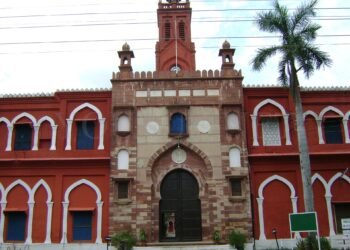
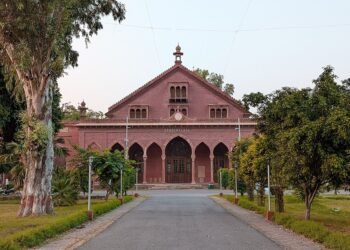
The university began as the Muhammadan Anglo-Oriental College in 1875 and became AMU in 1920. Its older core, around Sir Syed Hall, has Victoria Gate (1883), Strachey Hall and the university Jama Masjid, where Sir Syed Ahmad Khan’s tomb stands beside the mosque.
The campus is a working university, so visitors should respect class hours, hall rules and security checks. Our separate guide to campus landmarks covers each building in detail.
Best for: Architecture, colonial-era history and anyone curious about the Aligarh Movement.
3. Sir Syed Academy Museum (Sir Syed House)
Sir Syed House was originally a military mess. In 1876 Syed Mahmood, the first Indian judge of the Allahabad High Court, bought it for his father Sir Syed. It was restored in the early 1970s and now houses the Sir Syed Academy, inaugurated on 22 October 1974.
The museum has three galleries with Sir Syed’s personal belongings, his letters and records of the MAO College. It is the closest look visitors get at the founder’s daily life.
Best for: A short, focused visit on the AMU campus.
4. Jama Masjid, Upper Kot
The city’s Jama Masjid stands at Upper Kot, the highest point of old Aligarh. According to historian Rana Safvi, construction was started by Sabit Khan, the governor of Kol, in 1724 under Mughal emperor Muhammad Shah and finished in 1728.
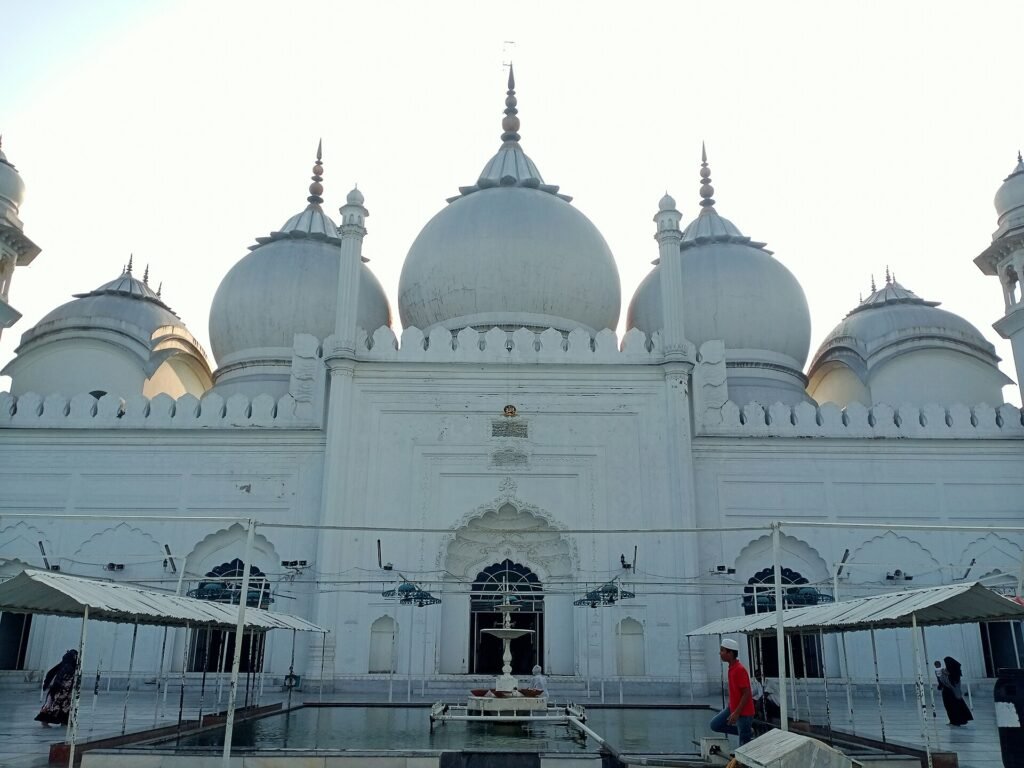
The mosque has three main domes and is known for its gilded domes and minarets. The narrow lanes around Upper Kot are part of the old city and are worth walking slowly.
Best for: Mughal-era architecture and the old city’s markets.
5. Khereshwar Mandir
Khereshwar is a Shiva temple in Tajpur Rasulpur village, on the Khair bypass road between State Highway 22A and National Highway 91. The district administration describes it as about 5 km from the city centre and about 10 km from the Aligarh bus stand.
Inside is a Shivling with several brass idols, and the ceilings carry a metallic mural finish. The temple is also associated with Swami Haridas, the 16th-century saint-musician, who is believed to have been born here.
Best for: Pilgrims and visitors interested in the Braj bhakti tradition.
6. Achaleshwar Mahadev Temple and Achal Taal
Achaleshwar Mahadev is an old Shiva temple on the banks of Achal Taal, a large water tank inside the city. The district lists it among Aligarh’s main religious sites.
Because it is inside the city, the temple is an easy stop to combine with a walk through the older markets. Visitors should follow temple customs on dress and footwear.
Best for: An evening visit inside the city.
7. Teerthdham Mangalayatan
Teerthdham Mangalayatan is a Jain pilgrimage complex on the Aligarh to Agra highway near Sasni, in neighbouring Hathras district, about 15 km from Aligarh. It is run by the Shri Adinath Kund-Kund Kahan Digamber Jain Trust.
The complex has four temples, including one dedicated to Bahubali, and also honours Rishabhanatha and Mahavira. The land was donated by industrialist Pawan Jain, according to the Hathras district website.
Best for: A half-day trip on the Agra road.
8. Shekha Bird Sanctuary
Shekha Jheel is a lake of about 25 hectares near Shekha village, roughly 17 km east of Aligarh and about 5 km off the Grand Trunk Road. The Forest Department manages it.
Winter is the season to go. Migratory and resident birds recorded here include the sarus crane, black-necked stork, Asian openbill, spoonbill and greylag goose. November to February is the best period.
Best for: Birdwatchers and families in winter.
9. Jawahar Park (Naqvi Park)
Jawahar Park, still widely called Naqvi Park, is a 42-acre public park in Civil Lines near AMU Circle. It has well-kept lawns, play areas and an open-air auditorium, and is part of the city’s Smart City works.
Morning walkers and families use it most. It sits on the way to the university, so it fits easily into a campus visit.
Best for: A break between campus and city sightseeing.
10. Dargah of Shah Jamal and the Numaish
The tomb of Shah Jamal, a Sufi saint linked with the Chishti order, is one of the oldest religious sites in the city and is surrounded by a graveyard. The traveller Ibn Battuta mentions the saint in his account.
In January and February the city hosts the Numaish, an annual exhibition with more than 150 stage events over about a month. If your visit falls in that window, plan an evening there.
Best for: Seasonal visitors and those interested in Sufi shrines.
Quick facts: places to visit in Aligarh
| Place | Type | Location |
|---|---|---|
| Aligarh Fort | Historic fort, ASI protected | Near AMU |
| AMU campus | University, heritage buildings | Civil Lines |
| Sir Syed Academy Museum | Museum | AMU campus |
| Jama Masjid | Mosque, 1724 to 1728 | Upper Kot, old city |
| Khereshwar Mandir | Shiva temple | Tajpur Rasulpur, Khair bypass |
| Achaleshwar Mahadev | Shiva temple | Achal Taal |
| Teerthdham Mangalayatan | Jain complex | Aligarh to Agra highway, about 15 km |
| Shekha Bird Sanctuary | Wetland | About 17 km east |
| Jawahar Park | Public park, 42 acres | Near AMU Circle |
| Numaish | Annual exhibition | January to February |
Official visiting hours are not published for most of these sites on the district website, so confirm timings locally before going, especially for the fort and the campus museum. Updates on campus events are in our AMU Updates section.
Frequently asked questions
What is Aligarh famous for?
Aligarh is best known for its lock and hardware industry and for Aligarh Muslim University, founded as a college in 1875. The city was earlier called Koil.
What is the best time to visit Aligarh?
November to February is the most comfortable period. It is also the best season at Shekha bird sanctuary, and the Numaish exhibition runs in January and February.
Can visitors go inside Aligarh Fort?
The fort is an ASI-protected site under AMU’s care, and part of it is used by the Botany department. Access can be restricted, so check with the university before visiting.
How far is Mangalayatan from Aligarh?
Teerthdham Mangalayatan is about 15 km from Aligarh on the Aligarh to Agra highway, near Sasni in Hathras district.
Sources: Aligarh district administration, tourist places, Hathras district, Teerthdham Mangalayatan, AMU, Sir Syed Academy, Aligarh Fort (Wikipedia).