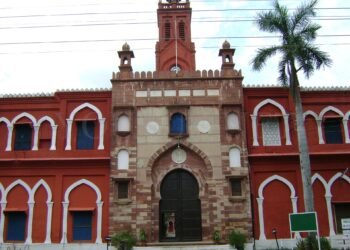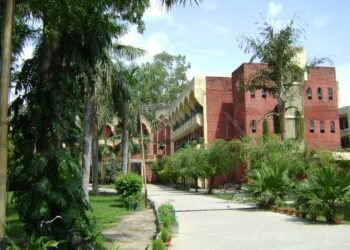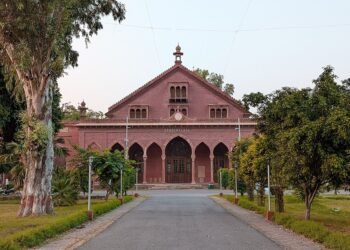

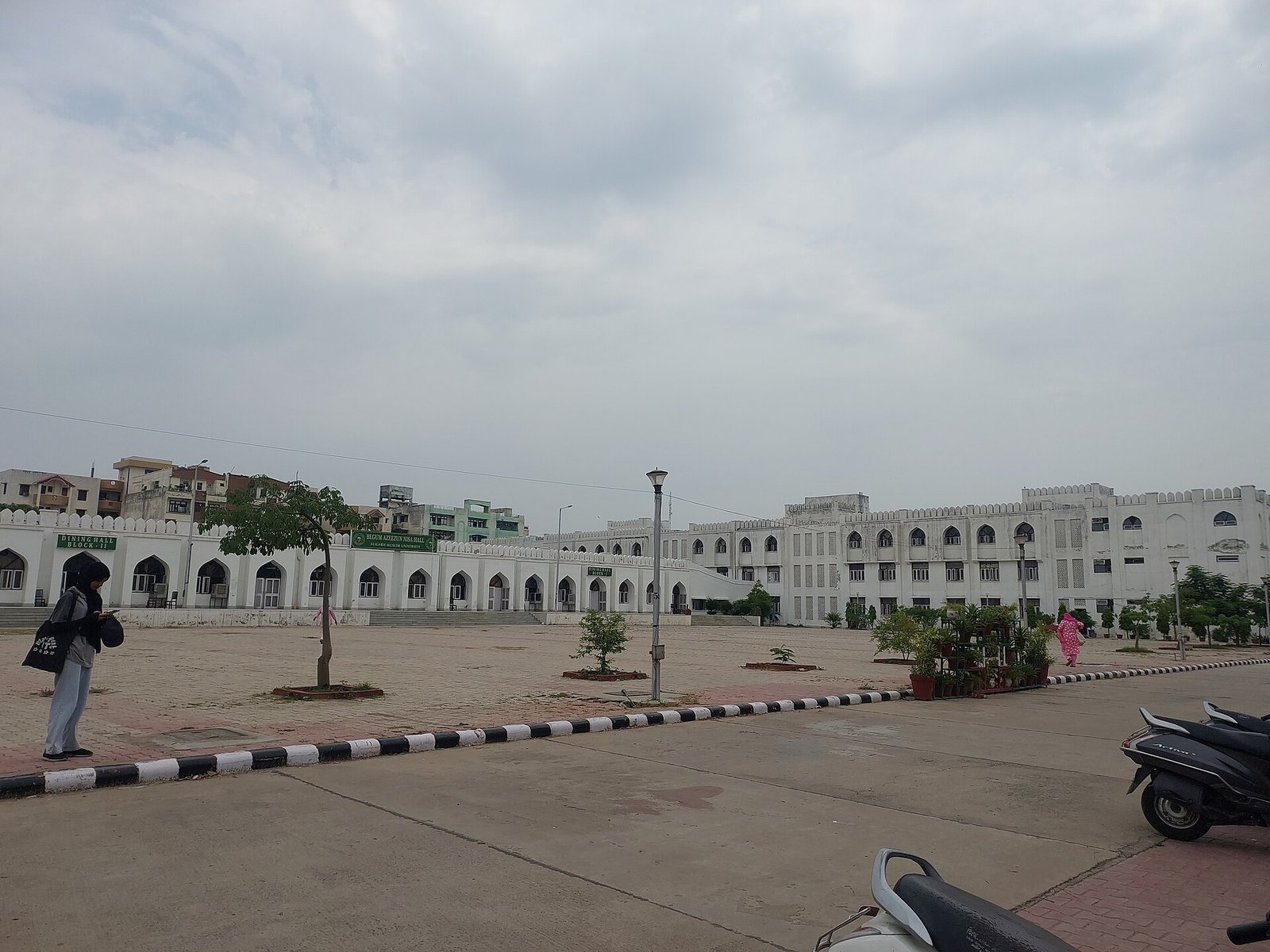
AMU’s halls of residence include Sir Syed Hall (North and South), Aftab, Viqarul Mulk, Mohsinul Mulk, Sir Ziauddin, Ross Masood and Mohammad Habib halls for men, and Abdullah, Sarojini Naidu, Indira Gandhi, Begum Sultan Jahan and Bibi Fatima halls for women. Each hall is a cluster of hostels run by a Provost.
At Aligarh Muslim University, a hall is not one building. The university describes a hall as a group of hostels under a Provost, with teacher wardens in charge of individual hostels, and each hall has its own common room, reading room, sports clubs and dining hall. This list covers the halls whose history the university has published. For the women’s halls in more detail, see our earlier piece in Students’ Corner.
1. Sir Syed Hall (North and South)
Sir Syed Hall is the oldest hall of the university and grew from the original MAO College buildings, starting with the Kacchi Barack that later became the Pakki Barack. It was split into North and South halls in the 1980s for administrative reasons.
 Also readFamous AMU Alumni: 12 Aligs Who Shaped Modern India
The South hall has 107 rooms of five seats each across six hostels, housing about 515 students. The North hall has eight hostels and about 690 residents. Between them they contain Strachey Hall, Asman Manzil, Mushtaq Manzil, the Lytton Library building and the Nizam Museum, with Victoria Gate on the south side.
Known for: Living inside the university’s heritage core.
2. Aftab Hall
Aftab Hall was inaugurated in 1932 by the AMU Old Boys’ Association in memory of Sahibzada Aftab Ahmad Khan, the university’s second vice-chancellor from 1924 to 1926 and a close associate of Sir Syed.
Its hostels are Morison Court, Mumtaz House, Aftab Hostel, MacDonnell Hostel and Latouche-Mumtaz Hostel. MacDonnell Hostel was completed in March 1904, and the foundation of Latouche-Mumtaz was laid in 1903, which makes these among the older residential blocks on campus.
Known for: Early 20th-century hostels and its link to the Old Boys.
3. Viqarul Mulk Hall
Viqarul Mulk Hall, often called VM Hall, was set up in 1932 when Sir Ross Masood was vice-chancellor. It is named after Nawab Viqarul Mulk, who became Secretary of the MAO College in 1908 and raised over Rs 7.5 lakh for it.
The hall has four hostels: Jubilee, Marris, Muzammil and Nasrullah. The university describes Viqarul Mulk as the most important figure of the Aligarh Movement after Sir Syed.
Known for: Its age and its namesake’s role in building the college.
4. Mohsinul Mulk Hall
Mohsinul Mulk Hall was established in 1963 in memory of Nawab Mohsinul Mulk, a friend and supporter of Sir Syed who served as Secretary of the MAO College. Its foundation stone was laid by Jawaharlal Nehru.
It began as Amin Hostel attached to Aftab Hall. Today it has six hostels named Allama Shibli, Amin, Saifi, Hali, Maulana Mohd. Ali Johar and Majaz, and about 820 residents.
Known for: Hostels named after figures of the Aligarh Movement.
5. Sir Ziauddin Hall
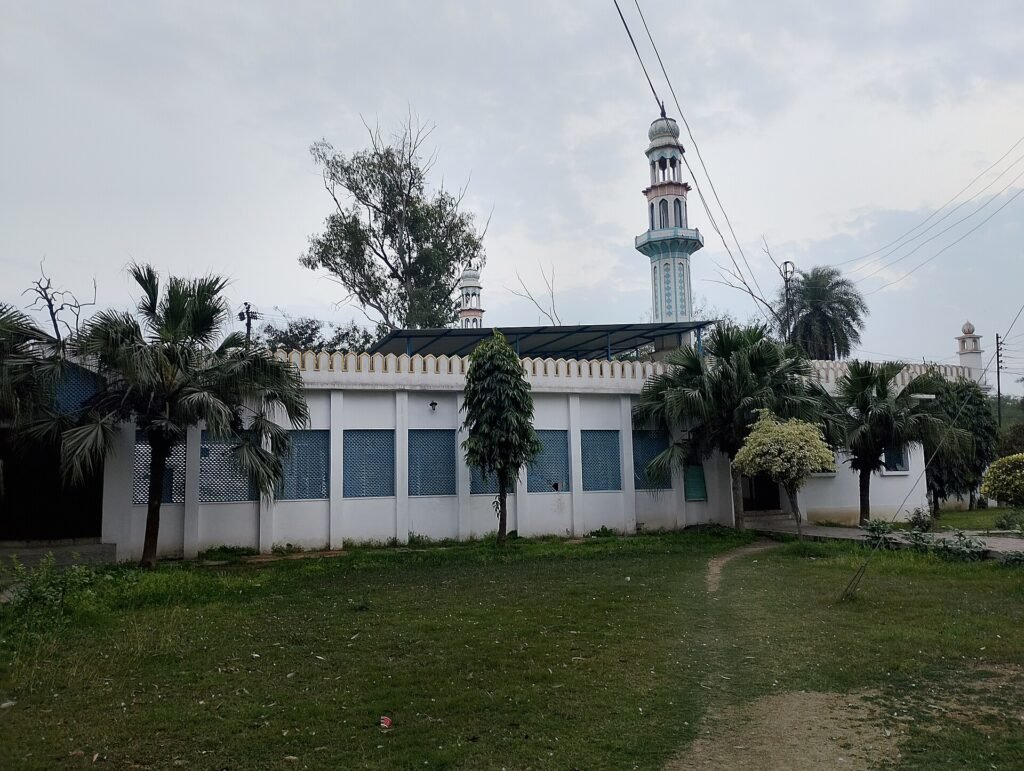
Earlier known as New Hall, it was renamed in 1982 after Dr Sir Ziauddin Ahmad, who served three terms as AMU’s vice-chancellor.
It has four hostels: Mohammad Omar Farooq, Rasheed Ahmed Siddiqui, Dhyan Chand and Zafar Ahmed Siddiqui. Most rooms are triple-seaters, and the hall has a reading room, computer lab, sports facilities and a mosque.
Known for: A hostel named after hockey great Dhyan Chand.
6. Ross Masood Hall
Ross Masood Hall was established in 1969 and named after Sir Ross Masood, Sir Syed’s grandson and a former vice-chancellor. Its foundation stone was laid by Prof. K. A. Nizami, and it started with 480 residents.
The four blocks are Nawab Ismail Khan, Sadar Yar Jung, Abdul Majeed Khowaja and Habibur Rehman hostels.
Known for: Its namesake’s motto of a sound mind in a sound body.
7. Mohammad Habib Hall
Mohammad Habib Hall was inaugurated in 1972 and named after historian Mohammad Habib, who studied at the MAO School and College and Oxford and later taught at AMU.
It was built mainly for research scholars, with 375 rooms, and later opened to students from other disciplines. Its strength is now about 925, across Chakraverti, Umaruddin and Haider Khan hostels.
Known for: Its origins as a hall for research scholars.
8. Hadi Hasan Hall
This hall is named after Prof. Syed Hadi Hasan, who raised Rs 30 lakh for the university’s Medical College at the request of Sir Ziauddin Ahmad. That college is now the Jawaharlal Nehru Medical College.
Known for: Its link with the founding of AMU’s medical college.
9. Abdullah Hall
Abdullah Hall is the oldest women’s hall. It is named after Sheikh Abdullah, the pioneer of women’s education who started the magazine Khatoon in 1904 and opened a girls’ school in 1906 with five students. Begum Sultan Jahan of Bhopal laid the foundation of the first girls’ hostel on 7 November 1911.
From that one hostel, the hall has grown to seven hostels with about 1,135 students. It is linked to the Women’s College, which Sheikh Abdullah founded.
Known for: The start of women’s residential education at Aligarh.
10. Sarojini Naidu Hall
Sarojini Naidu Hall was established in 1970 for women students and named after the freedom fighter, the first woman Governor of an Indian state. It has a main hostel and an annexe, the Nurses’ Hostel.
Residents include students of nursing and paramedical courses, engineering, physical education, MSc and MBA programmes.
Known for: Housing women students from professional courses.
11. Indira Gandhi Hall
Indira Gandhi Hall was inaugurated in 1994 for undergraduate women students, including those from the Women’s College and the Faculty of Unani Medicine. It holds 697 residents, 524 in the main building and 173 in the annexe.
The university notes residents from several countries, including Bangladesh, Thailand, Malaysia, Indonesia, Jordan, Yemen and the Gulf states.
Known for: A large, mixed undergraduate community.
12. Begum Sultan Jahan Hall
Set up in September 2008, this women’s hall is named after Begum Sultan Jahan, the Nawab Begum of Bhopal from 1901 and AMU’s first woman Chancellor. It has four blocks with 206 double rooms for 412 residents.
Known for: Undergraduate, postgraduate, law, management and research students under one roof.
13. Bibi Fatima Hall
Opened to students on 1 August 2011 as the Engineering Hall for Girls, it was renamed Bibi Fatima Hall in April 2014. It houses women in BTech, BArch, MTech, MSc (Polymer Science) and PhD programmes.
Known for: A dedicated hall for women in engineering and architecture.
Quick facts: AMU halls with year of start
| Hall | Residents | Year |
|---|---|---|
| Sir Syed Hall (North and South) | Men | Oldest, split in 1980s |
| Aftab Hall | Men | 1932 |
| Viqarul Mulk Hall | Men | 1932 |
| Mohsinul Mulk Hall | Men | 1963 |
| Ross Masood Hall | Men | 1969 |
| Mohammad Habib Hall | Men | 1972 |
| Sir Ziauddin Hall | Men | Renamed 1982 |
| Abdullah Hall | Women | First hostel 1911 |
| Sarojini Naidu Hall | Women | 1970 |
| Indira Gandhi Hall | Women | 1994 |
| Begum Sultan Jahan Hall | Women | 2008 |
| Bibi Fatima Hall | Women | 2011 |
AMU’s list of provosts also includes Nadim Tarin Hall, Sir Shah Sulaiman Hall, B.R. Ambedkar Hall, Begum Azeezun Nisa Hall, the N.R.S.C. for non-resident students and the Allama Iqbal Boarding House for senior secondary school boys. Hall allotment rules are announced each session, so check the latest notices in our AMU Updates section.
Frequently asked questions
How many halls are there in AMU?
AMU’s official list of hall provosts names 20 units, counting Sir Syed Hall North and South separately and including the N.R.S.C. for non-resident students and a boarding house for school students.
Which is the oldest hall in AMU?
Sir Syed Hall is the oldest. It grew out of the original MAO College buildings and was split into North and South halls in the 1980s.
Which are the girls’ halls in AMU?
Women’s halls include Abdullah Hall, Sarojini Naidu Hall, Indira Gandhi Hall, Begum Sultan Jahan Hall and Bibi Fatima Hall, all of which the university describes as halls for women students.
What is a hall of residence at AMU?
It is a group of hostels under a Provost, with wardens for each hostel, a common dining hall, a common room, reading room and student societies.
Sources: AMU, Provosts of halls, AMU, Aftab Hall, AMU, Abdullah Hall, AMU, Sir Syed Hall (South).