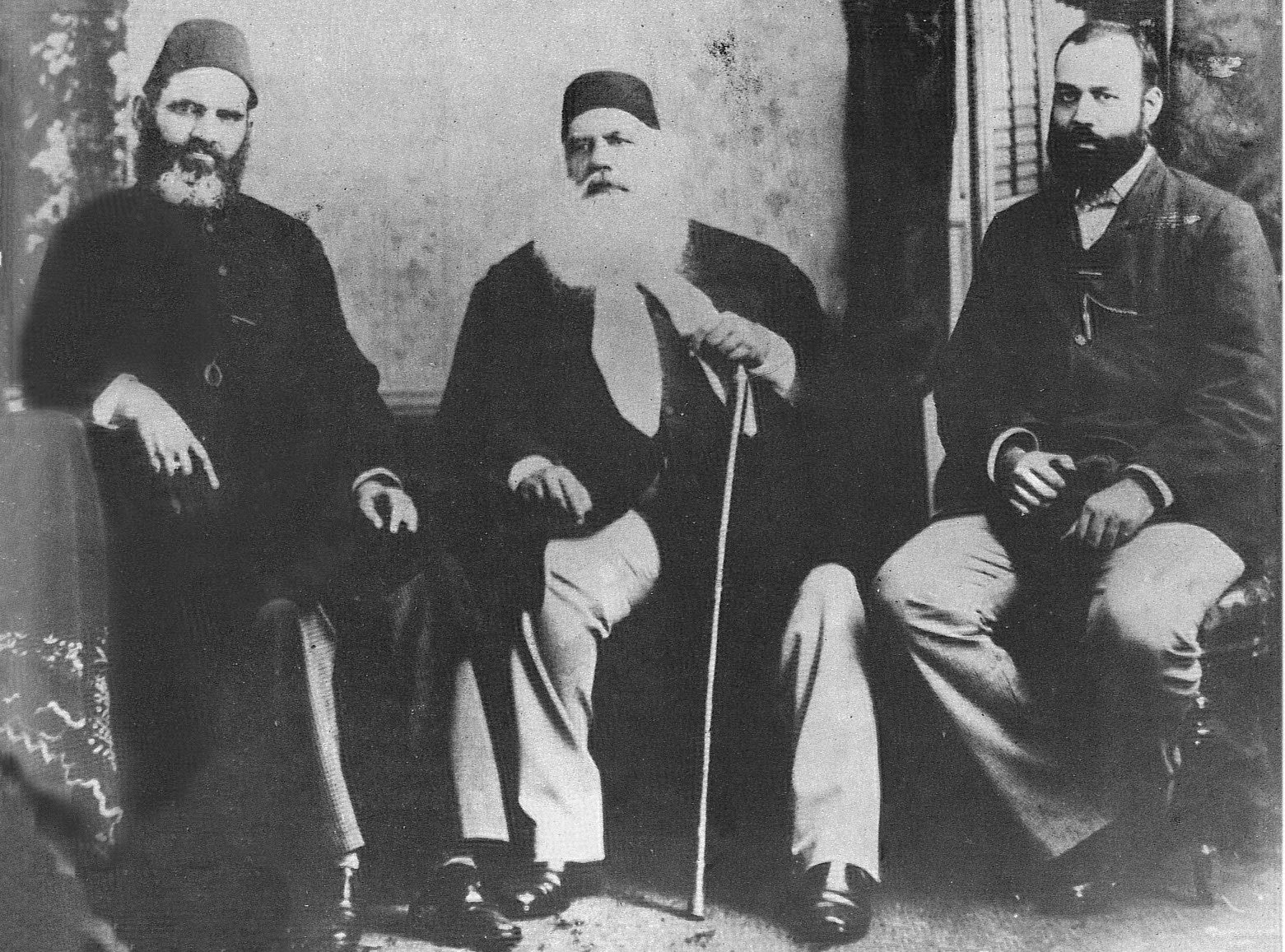
The Aligarh Movement was a late 19th-century reform effort led by Sir Syed Ahmad Khan to bring modern, Western-style education to Indian Muslims after 1857. Its main tools were the Scientific Society, the journal Tahzeeb-ul-Akhlaq, the MAO College at Aligarh and the Muhammadan Educational Conference. The college later became Aligarh Muslim University.
The movement took its name from the town where its key institutions stood. It was never a single organisation with a membership list. It was a network of people, papers and schools that shared one broad aim and argued, sometimes sharply, over how to reach it.
Why the movement began
After the revolt of 1857, Sir Syed concluded that Indian Muslims had fallen behind in education, government employment and public life. He blamed, in large part, the absence of modern subjects such as science and English in the education most Muslim families received.
 Also readAligarh Fort History: Lodi Fort to the 1803 Battle of Aligarh
His answer was to combine Western learning with religious and Oriental studies, and to do it through institutions run by Muslims themselves. He also wanted to reduce mistrust between the community and the British government, which he believed was blocking progress.
Main aims
- Modern education: English, science and new subjects alongside religious learning.
- Social reform: questioning customs he saw as harmful and encouraging rational debate.
- Urdu publishing: making modern knowledge available in Urdu through translation.
- Political caution: working with the colonial government rather than against it in that period.
The Scientific Society
Sir Syed’s Translation Society, started at Ghazipur in 1863, grew into the Scientific Society in 1864. It later moved to Aligarh, where it became the Scientific Society of Aligarh. Raja Jai Kishan Das served as its secretary.
The society translated English books on science, history and political economy into Urdu. It also published the Aligarh Institute Gazette, which carried news and opinion in English and Urdu and became one of the movement’s main voices.
Tahzeeb-ul-Akhlaq
Sir Syed launched Tahzeeb-ul-Akhlaq on 24 December 1870, soon after returning from England. Its English title was The Mohammedan Social Reformer. The journal took up questions of education, religion, social custom and manners, and helped shape a plain, argumentative style of Urdu prose.
Institutions it built
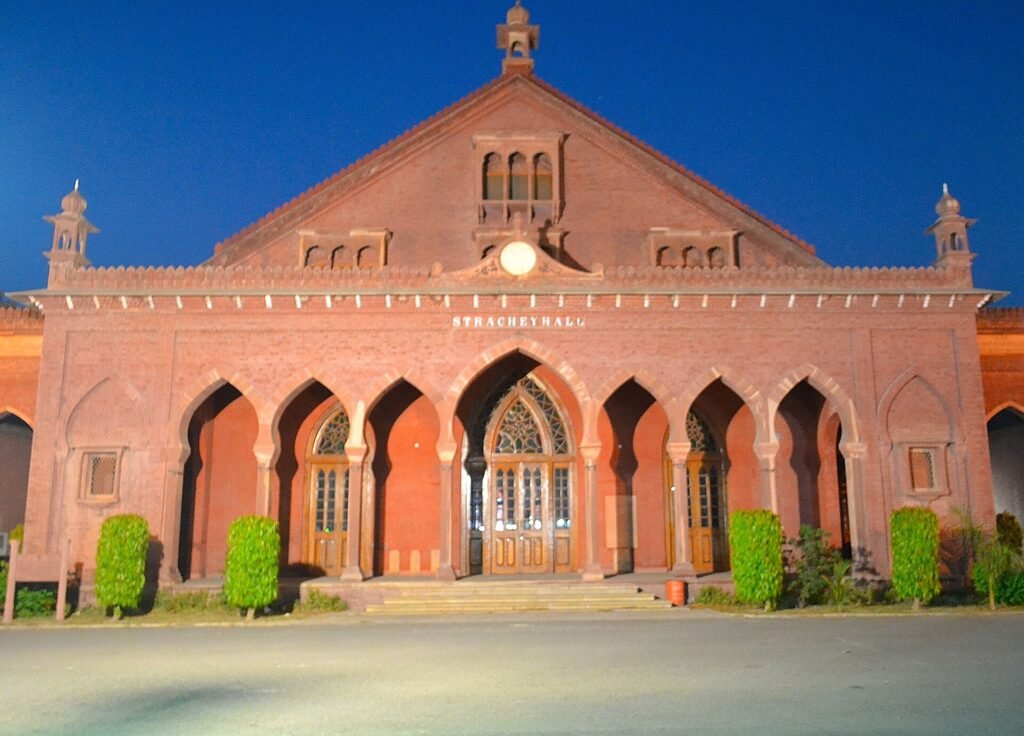
The school at Aligarh opened on 24 May 1875 and became the Muhammadan Anglo-Oriental (MAO) College in 1877. It was residential, followed the Oxford and Cambridge model, and became the centre of the movement. Its full history is in our history section.
In 1886 Sir Syed founded the Muhammadan Educational Congress, renamed the All India Muhammadan Educational Conference in 1890. Its annual sessions in different cities spread the movement’s message and raised support for education across India.
Key figures of the Aligarh Movement
Sir Syed Ahmad Khan (1817 to 1898)
The founder and leading figure. He wrote, raised funds, edited journals and ran the college until his death on 27 March 1898.
Nawab Mohsin-ul-Mulk (1837 to 1907)
Born Syed Mir Mehdi Ali at Etawah, he served the Nizam of Hyderabad before joining Sir Syed. He became secretary of the MAO College management after 1898 and held the post until his death. He was also a leading defender of Urdu during the Hindi-Urdu controversy.
Nawab Viqar-ul-Mulk
He served as honorary secretary of the MAO College and, in 1901, founded the Mohammadan Political Organisation to put Muslim concerns before the government.
Altaf Hussain Hali (1837 to 1914)
The poet wrote the Musaddas (1879) at Sir Syed’s urging, a long poem on the decline of Indian Muslims. He also wrote Hayat-e-Javed (1901), a biography of Sir Syed, and Muqaddama-e-Sher-o-Shairi, regarded as the first book of Urdu literary criticism.
Shibli Nomani (1857 to 1914)
He taught Persian and Arabic at MAO College for about 16 years, from 1882 to 1898. He shared the goal of Muslim progress but placed more weight on reviving Islamic history and heritage. He later led Nadwatul Ulama in Lucknow, and the Darul Musannifin at Azamgarh grew out of his plan.
Others
Nazir Ahmad Dehlvi, the novelist, was associated with the Scientific Society. Chiragh Ali was a scholar, educationist and close associate of Sir Syed. Syed Mahmood, Sir Syed’s son, was joint secretary of the college. Theodore Beck, the second principal, shaped its early teaching and student life.
| Element | Year | Role |
|---|---|---|
| Scientific Society | 1864 | Urdu translations of modern works |
| Tahzeeb-ul-Akhlaq | 1870 | Journal of social and religious reform |
| Madrasatul Uloom | 1875 | School at Aligarh |
| MAO College | 1877 | Residential college, centre of the movement |
| Educational Conference | 1886 | Annual all-India sessions on education |
| Aligarh Muslim University | 1920 | University created by the AMU Act |
Criticism and opposition
The movement faced opposition from several sides. Many conservative ulema objected to Sir Syed’s rational approach to religion and accused him of promoting Western ways. Scholars linked to Deoband opposed the movement, and the pan-Islamist thinker Jamal al-Din al-Afghani criticised Sir Syed.
Satirists also took aim. The Lucknow paper Awadh Punch and the poet Akbar Allahabadi mocked the movement’s Western habits. Historians also debate its political stance, especially Sir Syed’s advice to Muslims to keep away from the Indian National Congress.
Legacy
The movement’s most direct legacy is Aligarh Muslim University. It also produced a generation of graduates who went into government, law, journalism and politics, and it shaped modern Urdu prose.
The All India Muslim League was formed at Dhaka in 1906, during a session of the Educational Conference, and several Aligarh figures, including Mohsin-ul-Mulk and Viqar-ul-Mulk, were involved. Aligarh alumni later went in different political directions, including the Khilafat Movement, the Pakistan Movement and the nationalist Jamia Millia Islamia, founded at Aligarh in 1920. Profiles of notable Aligs appear in our listicles.
Frequently asked questions
Who started the Aligarh Movement?
Sir Syed Ahmad Khan started it in the decades after 1857, with associates such as Mohsin-ul-Mulk, Viqar-ul-Mulk, Altaf Hussain Hali and Shibli Nomani.
What were the main aims of the Aligarh Movement?
To spread modern education among Indian Muslims, encourage social reform, translate modern knowledge into Urdu and build trust with the government of the time.
What was Tahzeeb-ul-Akhlaq?
A reform journal launched by Sir Syed on 24 December 1870, known in English as The Mohammedan Social Reformer.
What is the legacy of the Aligarh Movement?
Its main legacy is Aligarh Muslim University. It also influenced Urdu prose, Muslim education across India and the political careers of many of its graduates.
Sources: Wikipedia: Aligarh Movement, AMU: History, Wikipedia: Altaf Hussain Hali, Wikipedia: Shibli Nomani.