

Updated on 16 October 2026: facts, travel details and places revised. First published on 17 December 2017.
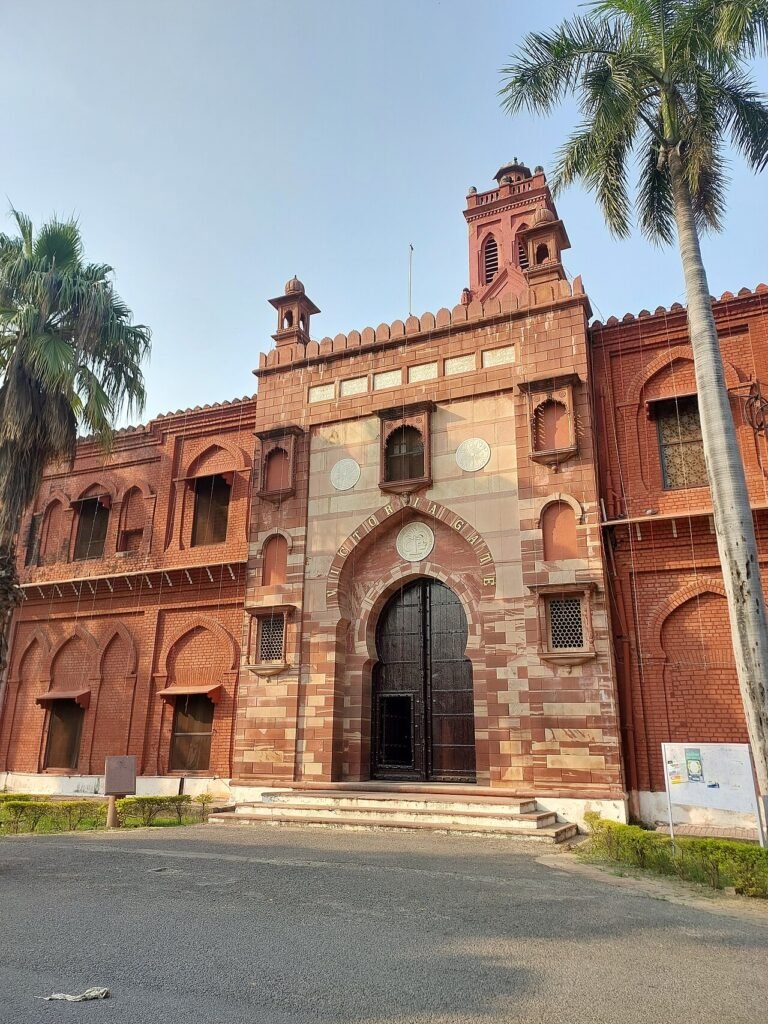
Aligarh is a city in the Doab region of western Uttar Pradesh, about 140 km south-east of Delhi and about 350 km from Lucknow. It is known as the home of Aligarh Muslim University (AMU) and as the “City of Locks” for its lock-making industry. Beyond these two, the city has old buildings, a fort, a winter bird sanctuary, a month-long annual fair and a strong food and chai culture. This guide covers how to get here, what to see and what to eat.
Aligarh at a glance
- Known for: Aligarh Muslim University, locks and hardware, the annual Numaish, Mughlai food.
- Best time to visit: November to March, when the weather is cool, the Numaish is on and migratory birds are at Shekha Jheel.
- Time needed: one full day for the AMU campus and the city, two days if you add the fort, the old city and Shekha Jheel.
Getting here
- By air: the nearest major airports are Noida International Airport at Jewar (about 80 km, commercial flights began in June 2026) and Indira Gandhi International Airport, Delhi (about 160 km). Aligarh also has a small regional airport that began UDAN flights in 2024; check current schedules before planning.
- By train: Aligarh Junction is on the main Delhi to Howrah line, with direct trains to Delhi, Kanpur, Prayagraj, Lucknow and many other cities.
- By road: the GT Road (NH 34) links Aligarh to Delhi through Khurja and Bulandshahr. The Yamuna Expressway can also be used, leaving it near Tappal. The drive from Delhi takes about three to four hours.
Where to stay
Most hotels are around Centre Point, Marris Road, Ramghat Road and the railway station. Staying near Centre Point or Marris Road keeps you close to both the AMU campus and the main markets. Book ahead during the Numaish and around Sir Syed Day (17 October), when the city is busy.
 Also readUP Police Arrests Former AMUSU Cabinet Member Farhan Zuberi For Anti-CAA Protests In Aligarh
Places to see on the AMU campus
Start with the AMU campus, which is spread over about 467.6 hectares. AMU is a working university with gate security, so carry a photo ID and follow campus rules. For more detail, read our guide to AMU campus landmarks.
Bab-e-Syed
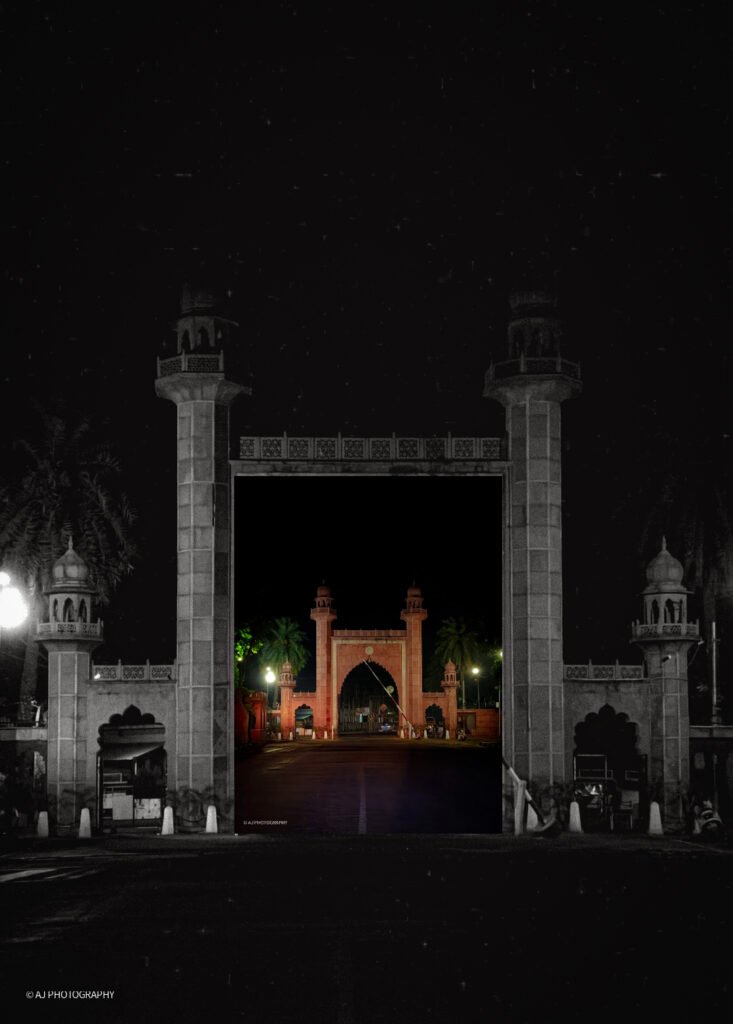
The main gateway of the university, built in the Indo-Islamic style. It is one of the most photographed spots in Aligarh.
Sir Syed House
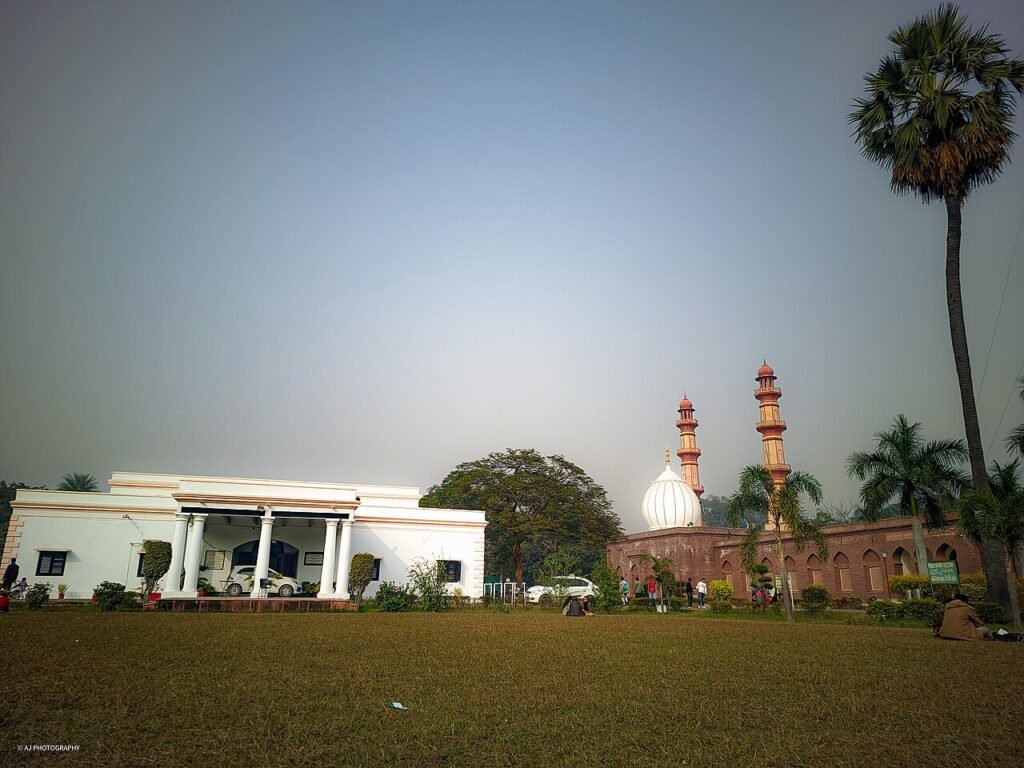
The former home of AMU’s founder, Sir Syed Ahmad Khan. It now houses the Sir Syed Academy, with a museum on his life and work and a garden. Read our explainer on Sir Syed Ahmad Khan.
K.A. Nizami Centre for Quranic Studies
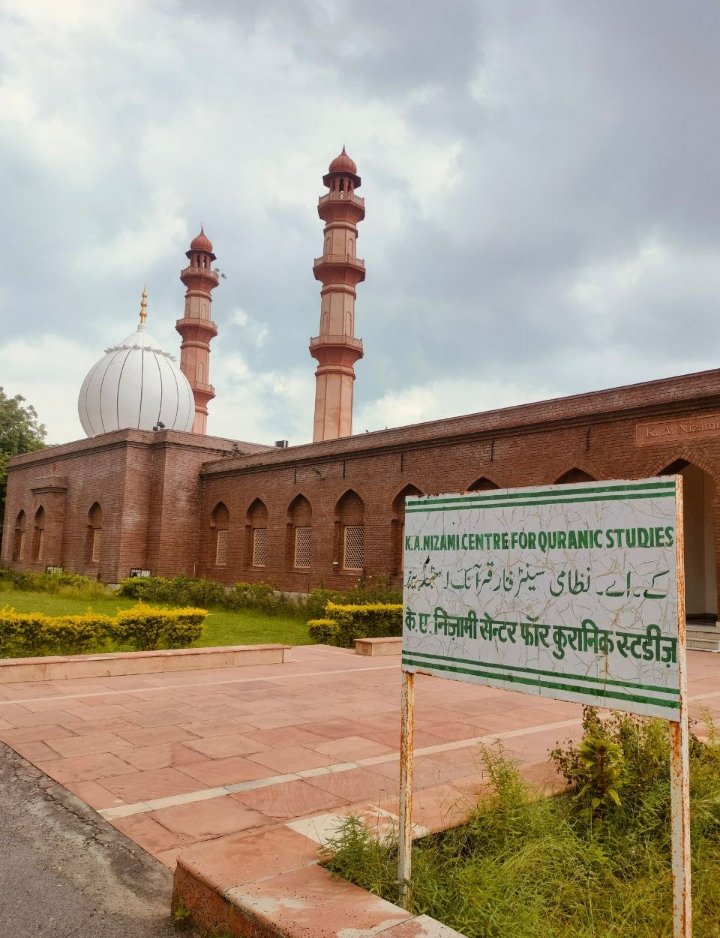
A modern building near Sir Syed House, designed by the Egyptian architect Abdel-Wahed El-Wakil, a winner of the Aga Khan Award for Architecture.
Sir Syed Hall: Victoria Gate, Strachey Hall and the Sir Syed Mosque
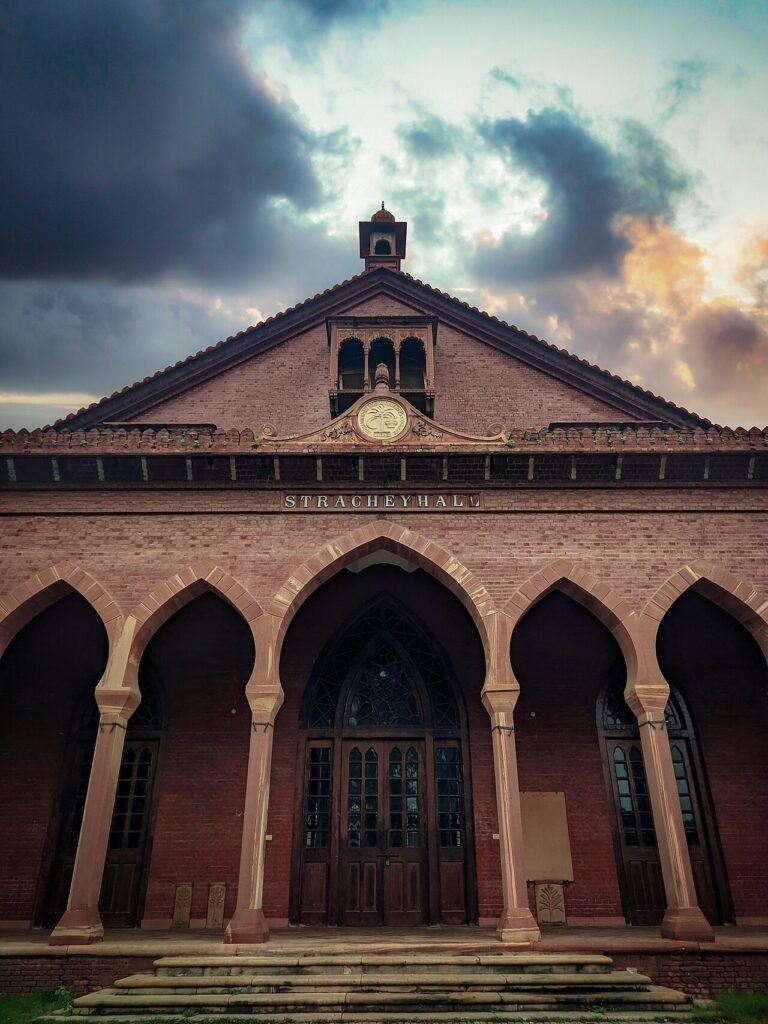
This is where the university began. The school Sir Syed opened in 1875 became the MAO College in 1877 and Aligarh Muslim University in 1920. The compound includes Victoria Gate with its clock tower (1883), Strachey Hall (foundation stone 1877) and the Sir Syed Mosque, where Sir Syed is buried. It is still a residential hall for students. Read the full MAO College to AMU timeline.
Maulana Azad Library
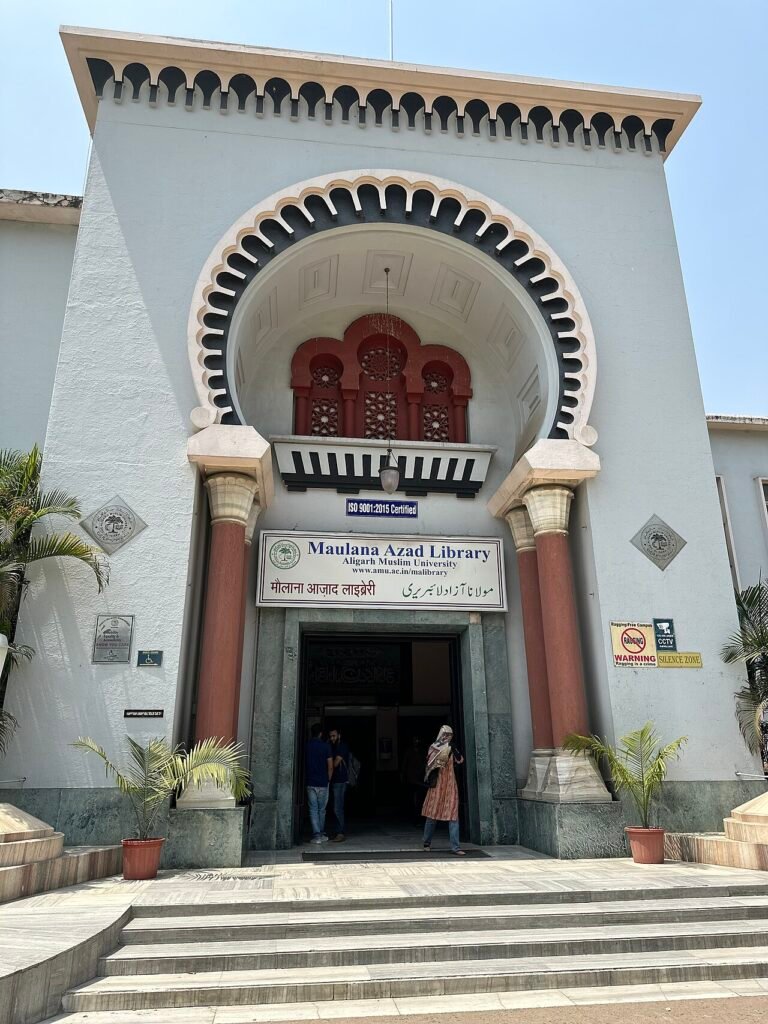
AMU’s central library, named after India’s first Education Minister, Maulana Abul Kalam Azad. The seven-storey building was inaugurated by Jawaharlal Nehru in 1960 and holds about 18 lakh items, including rare manuscripts. Read more in our Maulana Azad Library guide.
Kennedy Auditorium
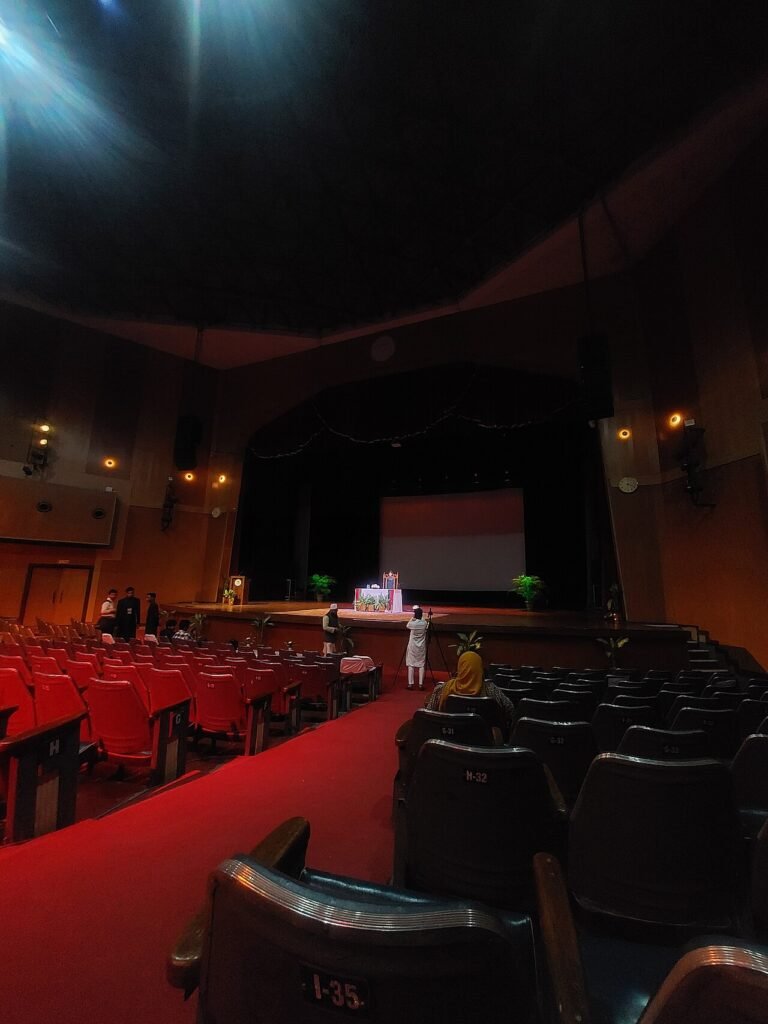
The university’s main auditorium and the venue for many cultural evenings, plays and lectures. Check for events if you are visiting during term time.
Musa Dakri Museum
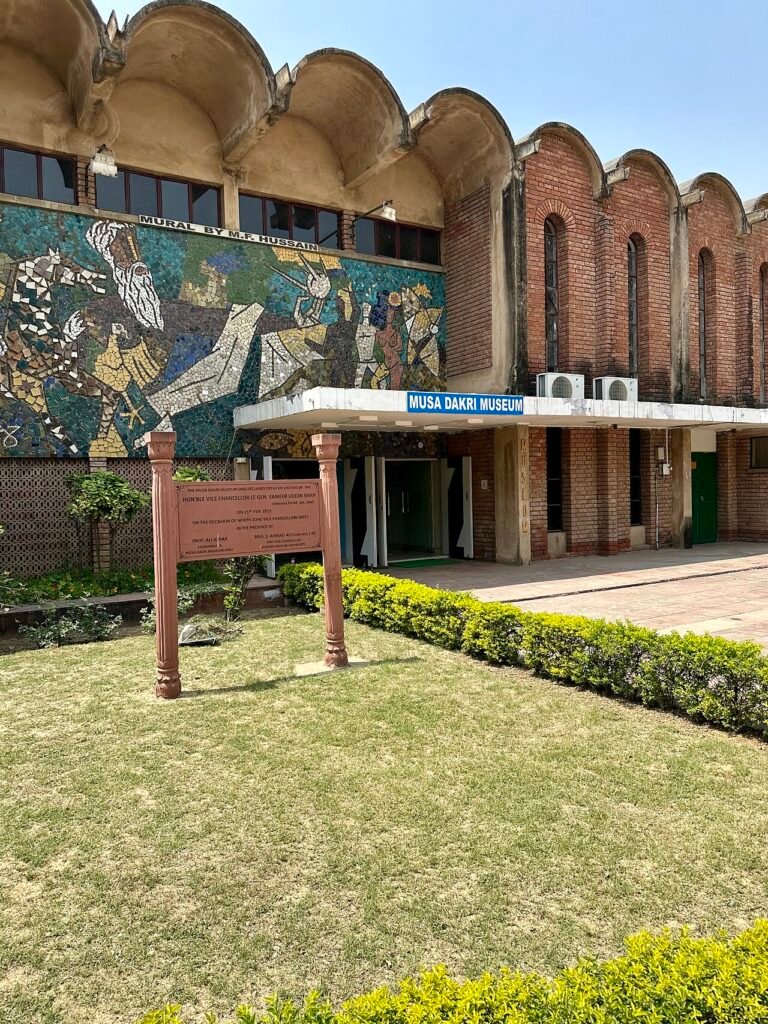
The university museum in the Kennedy Hall complex. According to AMU, it holds more than 1,366 archaeological artefacts and 30 sculptures, along with finds from the excavation at Atranjikhera in Etah district.
Moinuddin Ahmad Art Gallery
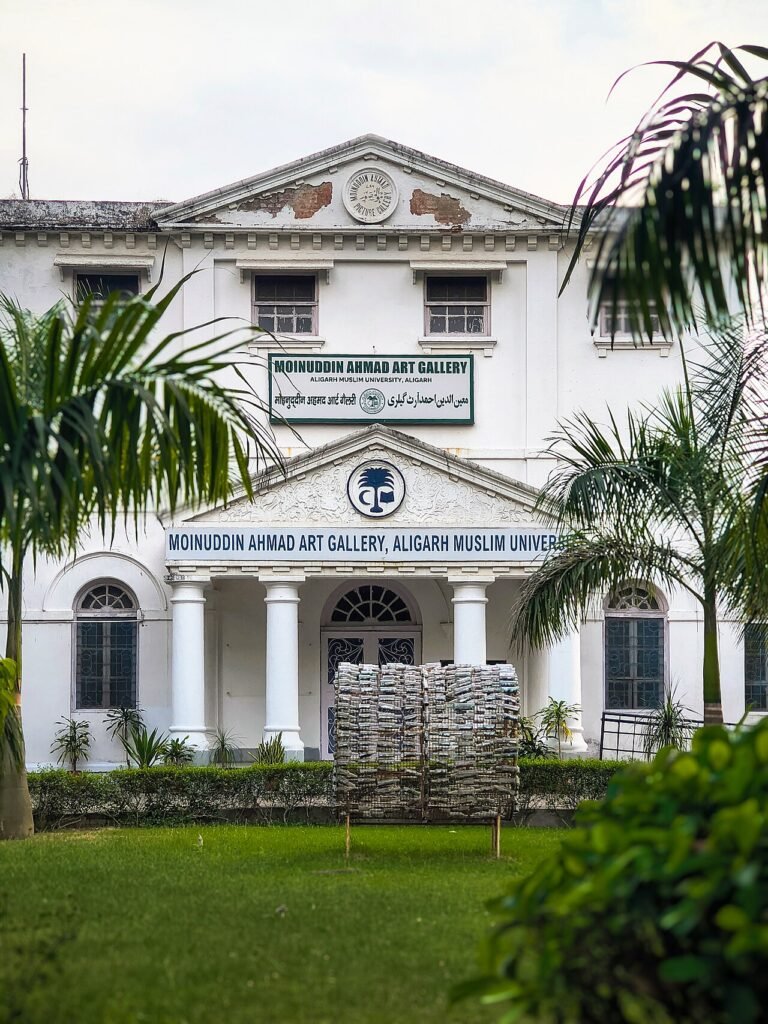
A small art gallery built in 1928 by Prof. Moinuddin Ahmad to promote painting in Aligarh. It was reopened in 2013 and holds exhibitions through the year.
Places to see in the city
Ghanta Ghar (Clock Tower)
The city’s clock tower, a well-known landmark in the busy market area.
Aligarh Fort
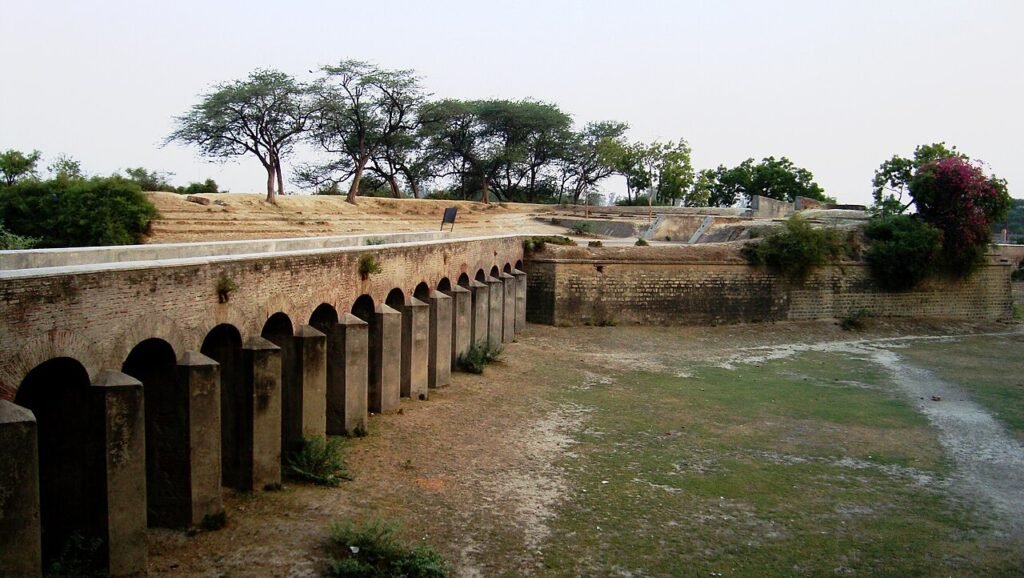
The first fort here was built in 1524 to 1525 by Muhammad, son of Umar, governor of Kol under Sultan Ibrahim Lodi. French engineers under Benoit de Boigne and Pierre Perron later gave it its present shape, with bastions and a deep ditch. British forces under General Lake captured it on 4 September 1803 in the Battle of Aligarh. The fort lies north of the AMU campus and is cared for by the university. Read our full article on Aligarh Fort and the 1803 battle.
Upar Kot (Old City)
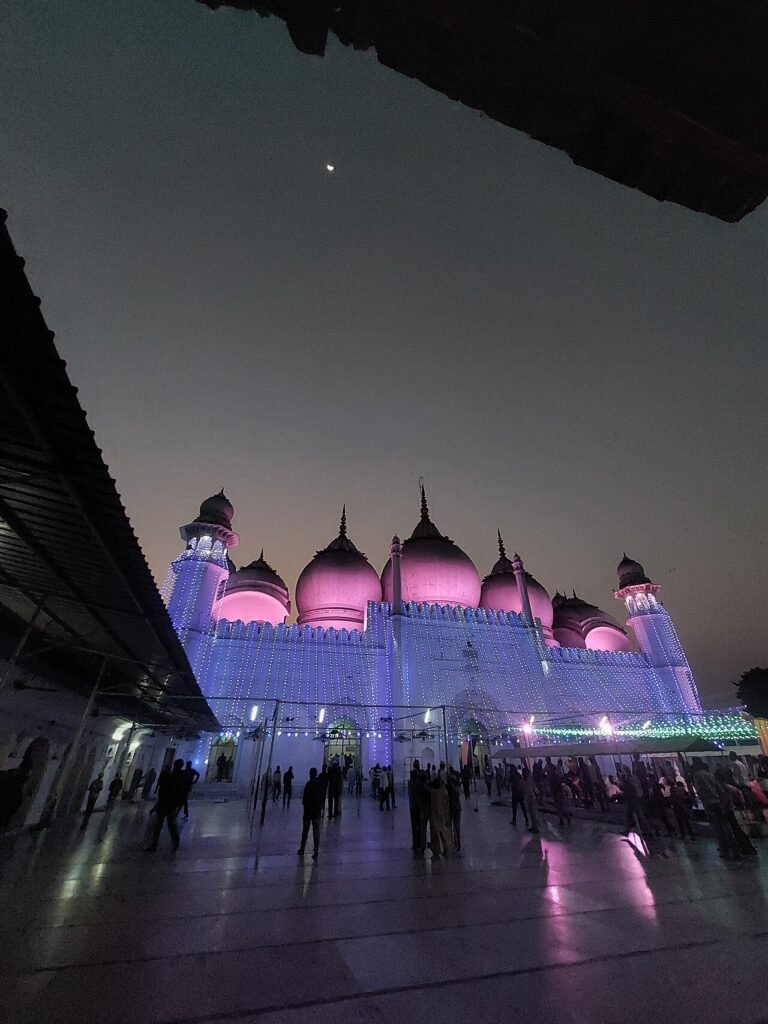
The old part of Aligarh, on raised ground, is crowded with lanes, small shops and food stalls. Its Jama Masjid, built in the 18th century, is one of the oldest mosques in the city. Visit in the evening for the food.
Centre Point
The modern centre of the city, with restaurants, cafes, brand stores and shopping. It is the busiest place in Aligarh in the evening.
Shekha Jheel Bird Sanctuary
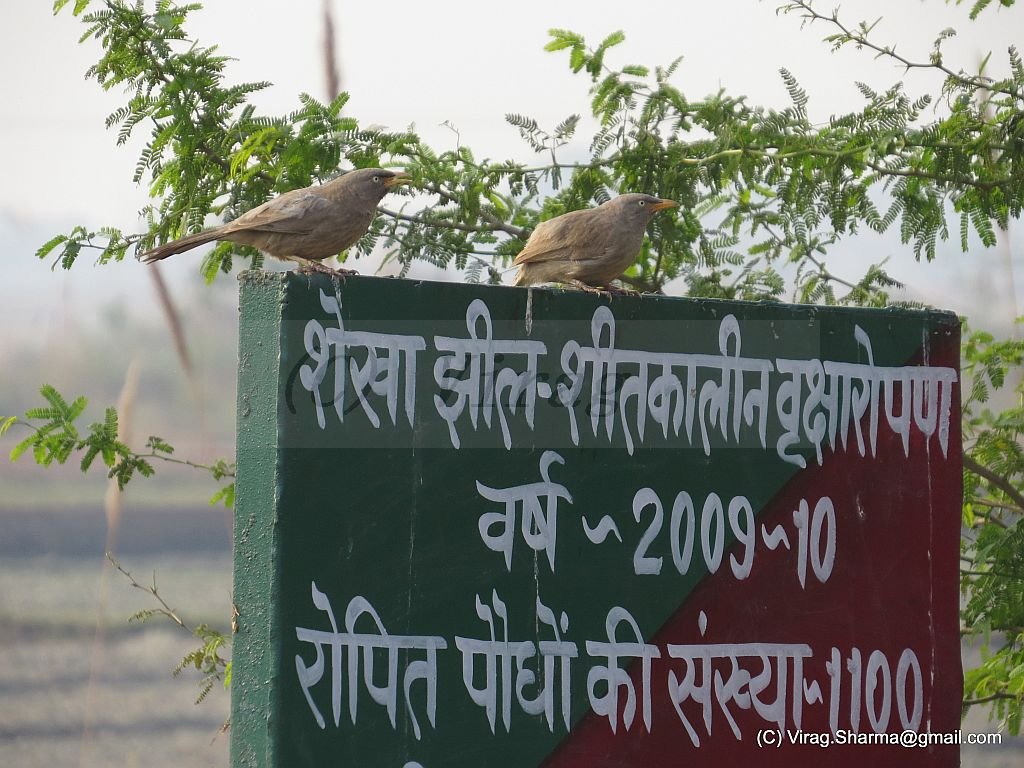
A lake and bird sanctuary about 17 km from Aligarh. In April 2026 it was declared a Ramsar site, a wetland of international importance. About 249 bird species have been recorded here, and migratory birds arrive in large numbers in winter. Go early in the morning between November and March.
Aligarh Numaish
The annual exhibition, known as the Numaish, is held at the Exhibition Ground for about a month, usually in January and February. It has food and textile stalls, rides and stage shows on its main stages, Kohinoor, Krishnanjali and Muktakash. If you are in Aligarh in winter, plan an evening here.
What to eat
- Dodhpur: the best-known food street near the AMU campus, with kebab, shawarma and biryani stalls and sit-down restaurants.
- Centre Point: restaurants and food chains for a sit-down meal.
- Tasveer Mahal, Purani Chungi and Rasal Ganj: local eateries and roadside dhabas, with food available till late at night.
- Upar Kot: traditional non-vegetarian food in the old city.
Chai culture
Chai is part of daily life in Aligarh, especially for AMU students. Try the roadside tea stalls at Dodhpur, Purani Chungi, Shamshad Market and Tasveer Mahal, where students and teachers meet in the evenings.
What to buy
- Locks and hardware: Aligarh is India’s best-known lock-making centre.
- Sherwanis: Aligarh tailors are known for the black sherwani worn at AMU. Read our guide to the AMU black sherwani.
- Books: Shamshad Market near the campus has bookshops for students.
Aligarh in a line of poetry
Majaz, in the poem that became the AMU Tarana, wrote of Aligarh:
“har shaam hai shaam-e-Misr yahaaN, har shab hai shab-e-Sheeraz yahaaN,
hai saare jahaaN kaa soz yahaaN aur saare jahaaN kaa saaz yahaaN”
Read the story of the anthem in Who wrote the AMU Tarana?
Frequently asked questions
How far is Aligarh from Delhi?
About 140 km by road, a drive of three to four hours. Trains from Delhi take about two to three hours.
What is Aligarh famous for?
Aligarh Muslim University, its lock industry, the annual Numaish and its Mughlai food.
Can visitors enter the AMU campus?
Parts of the campus can be visited, but AMU has gate security and its own rules. Carry a photo ID, and check with the university before visiting halls, the library or museums.
What is the best time to visit Aligarh?
November to March. The weather is pleasant, birds are at Shekha Jheel and the Numaish usually runs in January and February.