
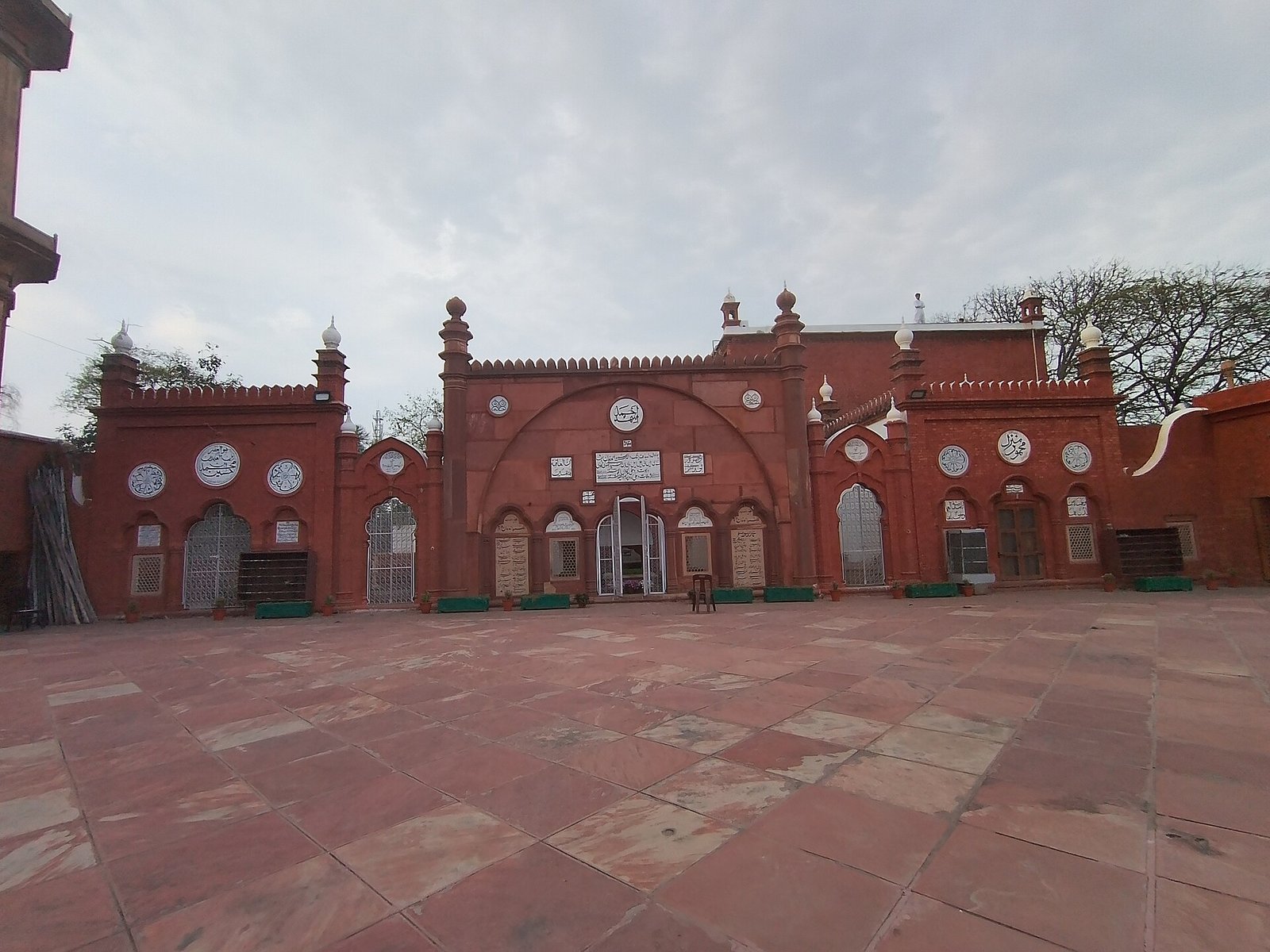
Aligarh was known as Kol or Koil until the 18th century. The town was called Muhammadgarh after a fort built in 1524 to 1525, Sabitgarh under Mughal governor Sabit Khan, and Ramgarh after the Jats took it in 1753. The Mughal commander Najaf Khan then gave it the name Aligarh in the 1770s.
The old name has not disappeared. The district administration still describes its headquarters as “Aligarh (Koil)”, and the name survives in local use for the older city. Here is how the names changed and what happened in each period.
Names of Aligarh through history
| Name | Period | Linked to |
|---|---|---|
| Kol or Koil | Ancient times to the 18th century | Origin uncertain; several legends |
| Muhammadgarh | From 1524 to 1525 | Muhammad, son of Umar, governor under Ibrahim Lodi |
| Sabitgarh | Early 18th century | Sabit Khan, governor under Farrukh Siyar and Muhammad Shah |
| Ramgarh | From 1753 | Jat ruler Surajmal’s capture of the fort |
| Aligarh | From the 1770s | Mughal commander Mirza Najaf Khan |
Where the name Kol came from
The origin of Kol is not settled. The Aligarh district administration notes that in old texts the word Kol could refer to a tribe, a place or mountain, or a sage or demon.
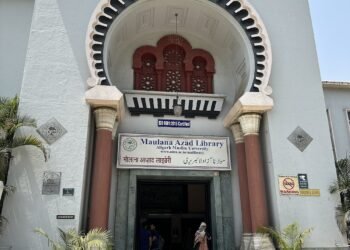
 Also readMaulana Azad Library AMU: History, Collection and Membership
One tradition, recorded by the 19th-century writer Edwin T. Atkinson, links the name to Balarama, who is said to have killed a demon called Kol here. Another legend credits the Dor Rajputs with founding Kol in 372 AD. Neither account can be confirmed, and historians treat them as local traditions.
Early history
The Dor Rajputs held Kol in the 12th century, before the Turkish conquest. Excavations in the area point to an earlier Buddhist settlement and, later, a Hindu temple.
In 1194, Qutb-ud-din Aibak marched on Kol and appointed Hisam-ud-din Ulbak as its first Muslim governor. The court historian Hasan Nizami described Kol as one of the best-known fortresses of Hind.
The Delhi Sultanate and the Mughals
Kol remained an important town under the Delhi Sultanate. By the mid-13th century, Ghiyas ud din Balban, before becoming Sultan, had built a minaret in the town. Under the Khiljis and Tughlaqs it was an iqta, a revenue assignment held by a noble.
The Moroccan traveller Ibn Battuta passed through Koil in 1341 and noted its mango groves. Under Akbar, Kol became the centre of a sarkar, a Mughal administrative unit, which included the dasturs of Marahra, Kol ba Haveli, Thana Farida and Akbarabad. Persian sources of the 13th century also describe Kol as a busy economic centre.
Forts and new names: 1524 to 1753
In 1524 to 1525, Muhammad, son of Umar, the governor of Kol under Ibrahim Lodi, built a fort and renamed the town Muhammadgarh. Two centuries later, Sabit Khan rebuilt the old Lodi fort and the town became Sabitgarh.
In 1753, as Mughal authority declined, the Jat ruler Surajmal of Bharatpur took the fort. The town was renamed Ramgarh. The district history also records the resistance of the local Bargujar chiefs during this period.
How the city got the name Aligarh
Mirza Najaf Khan, a Mughal commander who died in 1782, captured Ramgarh during his campaigns of the 1770s and named it Aligarh, meaning “fort of Ali”. The Aligarh district administration and Najaf Khan’s biographers credit him with the name.
The name first applied to the fort. Britannica notes that the city takes its formal name from the fort, while Koil continued as the name of the old town.
The British period
The fort, by then held by the Marathas and strengthened by French officers, was captured by British forces under General Lake on 4 September 1803. Aligarh district was formed in 1804, and Claude Russell took charge as its first Collector on 1 August 1804.
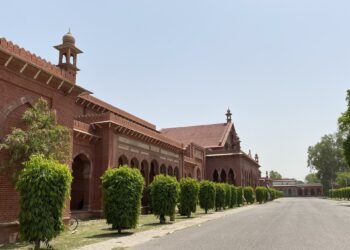
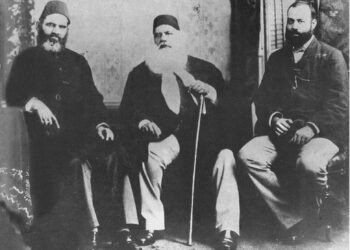
The town grew in two directions. Sir Syed Ahmad Khan opened his school in 1875, which became MAO College in 1877 and Aligarh Muslim University in 1920. Industry also arrived: Johnson and Co., the first English lock firm in Aligarh, was set up in 1870 and began small-scale lock making in 1890. Our history section covers the college story in detail.
Landmarks that carry this history
Several places in the city reflect these periods. Aligarh Fort, north of the AMU campus, is the fort that gave the city its name. Britannica also records the ruins of an older fortress at the centre of the city, its site now occupied by an 18th-century mosque.
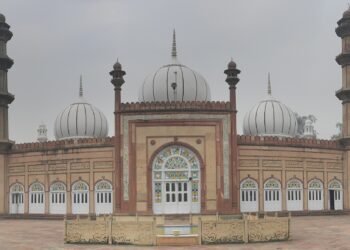
The Khereshwar Temple is known as the birthplace of Swami Haridas, the musician-saint. On the AMU campus, the Sir Syed Masjid, where the founder is buried, and Victoria Gate, whose foundation stone was laid in 1884, date from the college’s early decades.
The revolt of 1857 also touched the town. Indian troops stationed at Aligarh rose against British control, but did not kill their officers, who left with residents and families for Hathras.
Aligarh today
Aligarh is the headquarters of Aligarh district and of Aligarh division, which covers Aligarh, Hathras, Kasganj and Etah districts. It lies about 130 km south-east of Delhi.
The 2011 Census put the city’s population at 8,74,408. The city is known for AMU, its lock and brass hardware industry, and old neighbourhoods around the Upar Kot area. For current city news and places to visit, see our Aligarh section.
Frequently asked questions
What was the old name of Aligarh?
Aligarh was known as Kol or Koil. It was also briefly called Muhammadgarh, Sabitgarh and Ramgarh before the name Aligarh was adopted in the 18th century.
Who named the city Aligarh?
The Aligarh district administration credits Mirza Najaf Khan, a Mughal commander, who captured Ramgarh fort in the 1770s and renamed it Aligarh.
Why was Aligarh called Koil?
The origin is uncertain. Local traditions link it to a demon named Kol killed by Balarama, or to the Dor Rajputs, but neither is confirmed.
Is Koil still used as a name?
Yes. The Aligarh district administration refers to its headquarters as Aligarh (Koil), and the name remains in local use, including for the Koil assembly constituency.
Sources: Aligarh district: History, Britannica: Aligarh, Wikipedia: Aligarh.